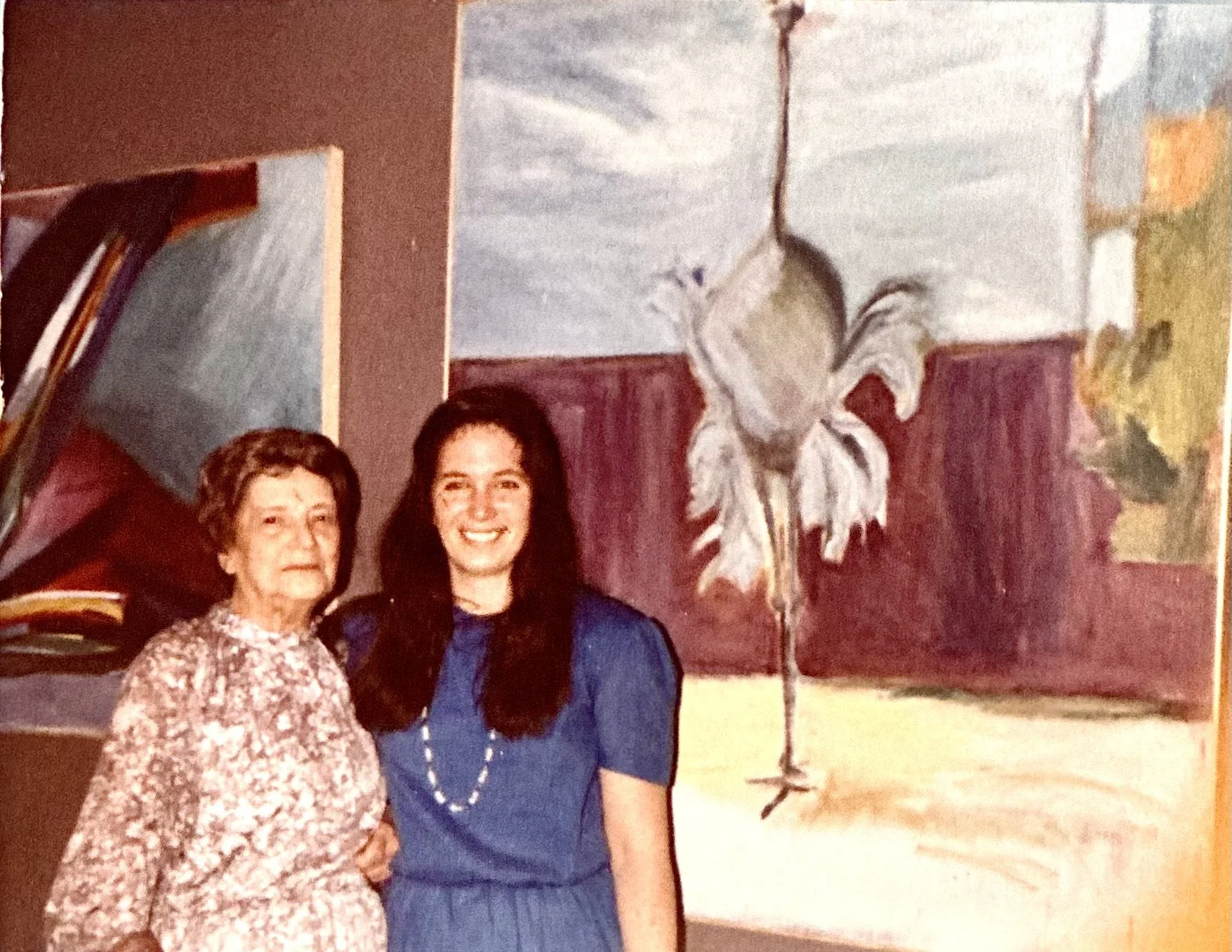
She had been a flapper in the 1920s, part of a generation of young women who claimed their independence openly—cutting their hair short, listening to jazz, and defying the rigid codes of behavior that came before them. In her time, that too was a form of risk, a declaration made without asking permission. Standing next to her that day, I felt that same quiet inheritance: the courage to step outside expectation and trust one’s own instincts.
An ostrich may not seem like an obvious declaration of seriousness, especially among a room full of classically trained young artists. Yet the painting was purchased by a critic before the exhibition even opened. In that quiet, unexpected gesture, I understood something essential: that following instinct mattered more than conformity. The work did not ask for permission, and neither did I.
I took that as a sign. I trusted it. I never looked back.