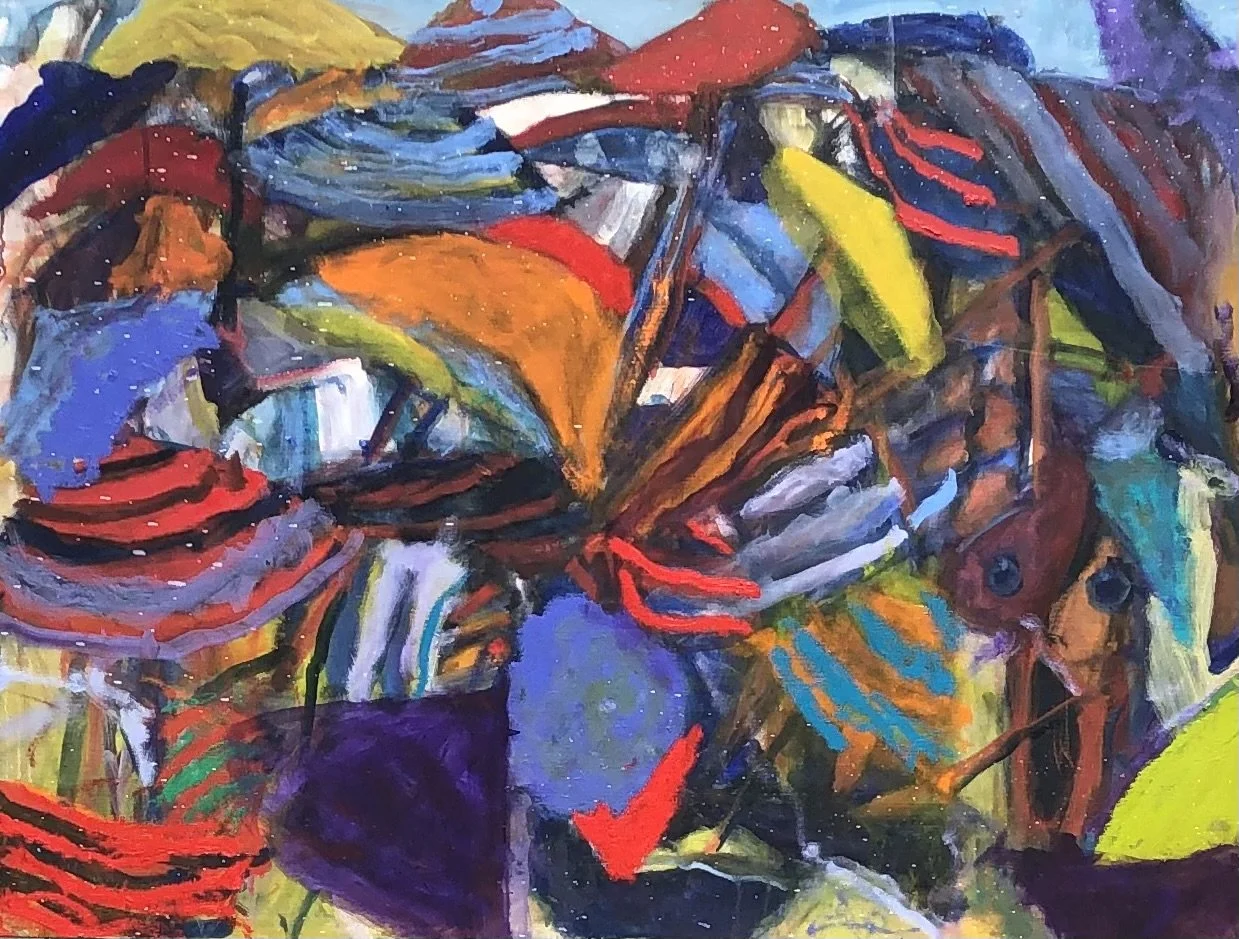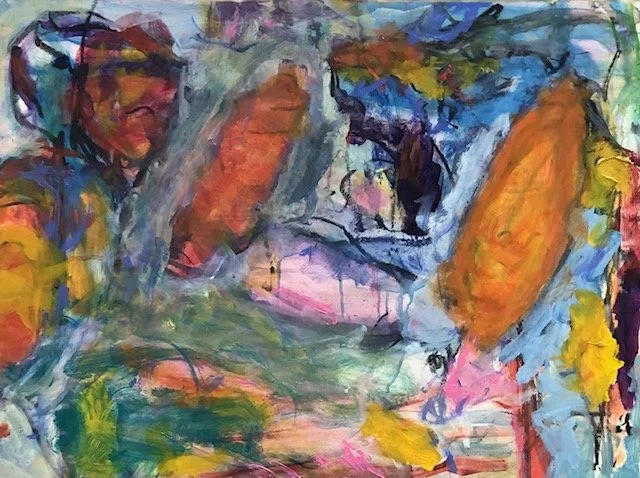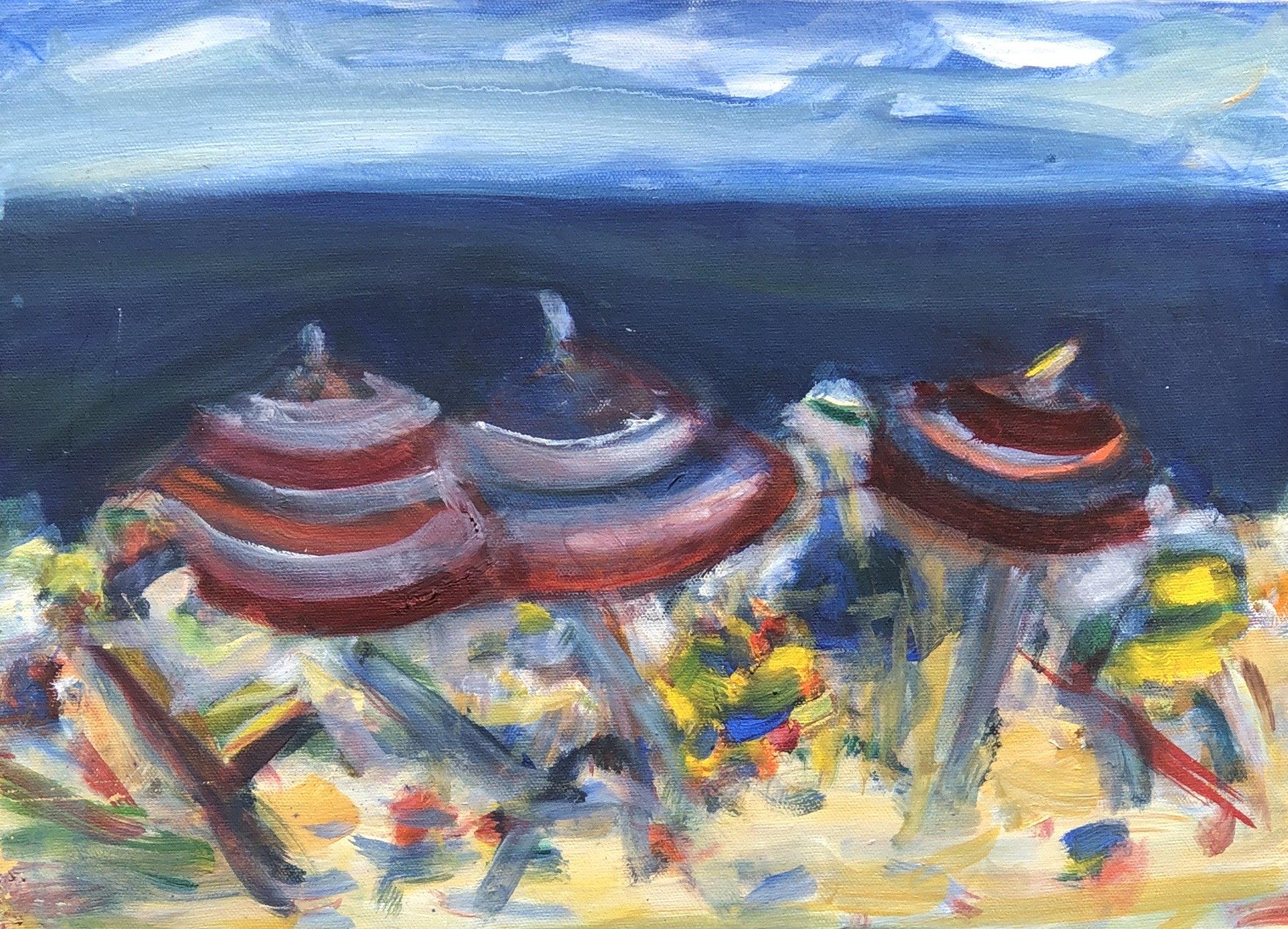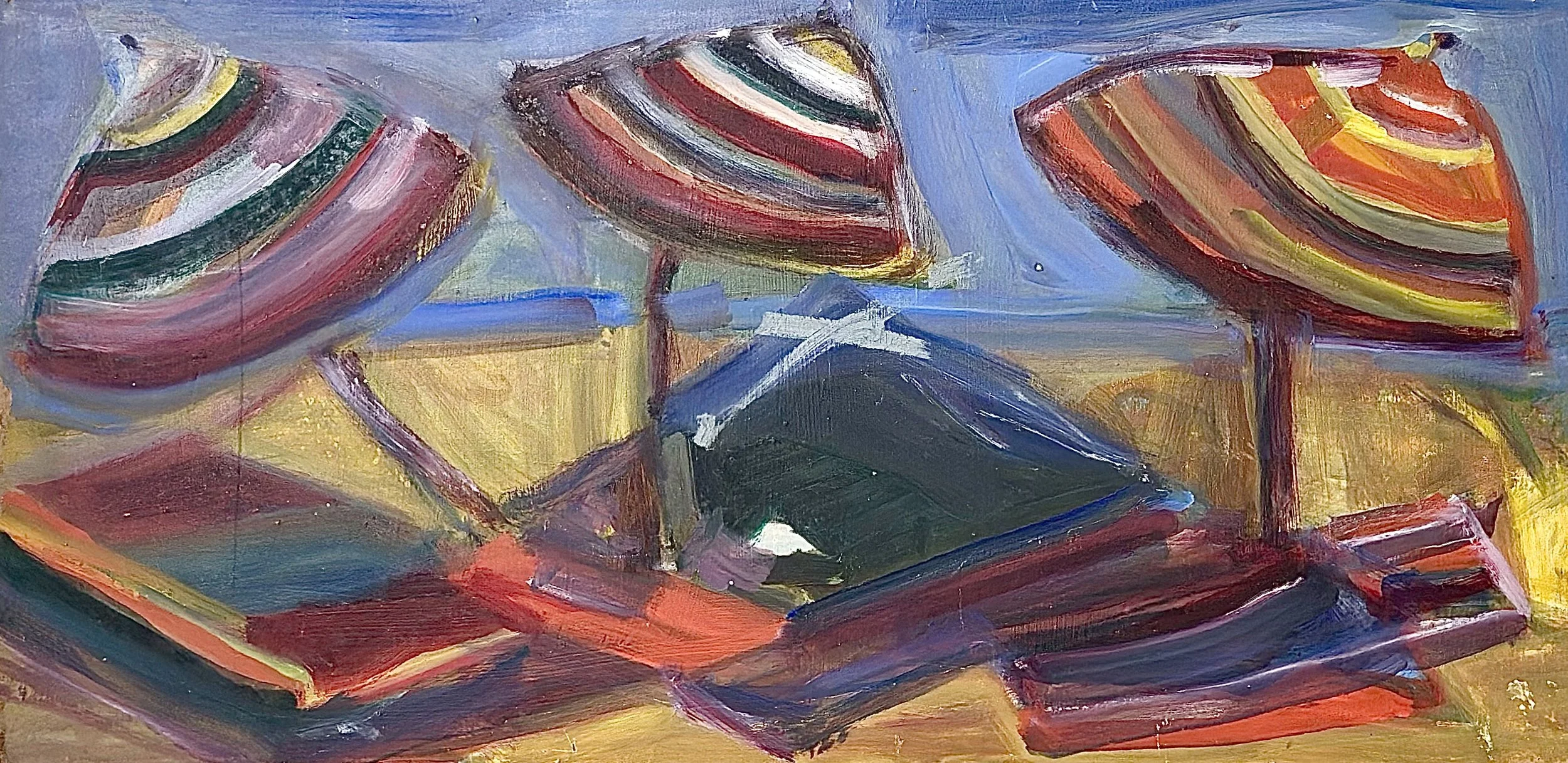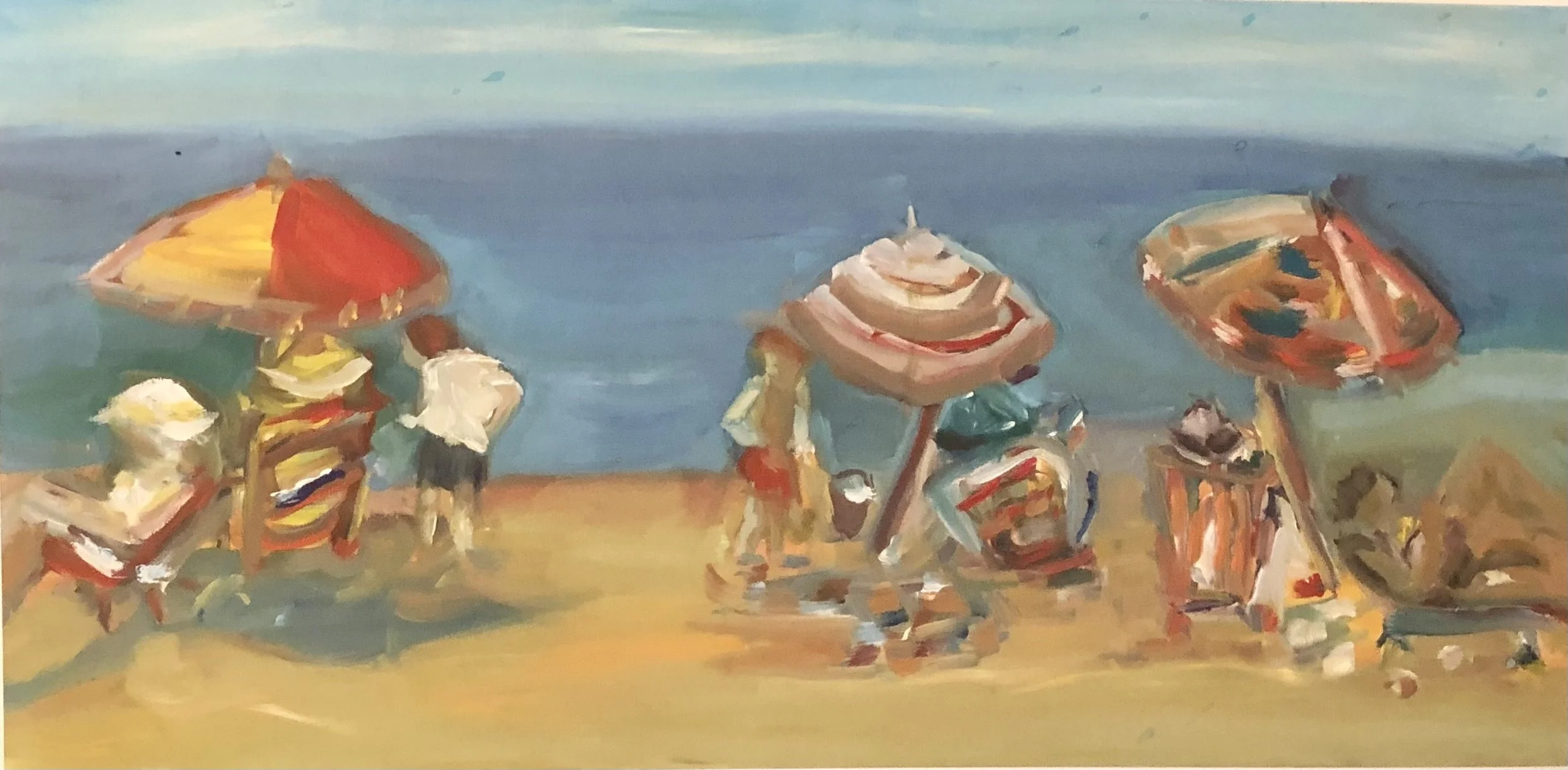
The beach exists in memory as much as it does in place. It appears as light on sand, wind moving through the dunes, and extended hours spent near the water along the New Jersey coast. These works are rooted in proximity rather than immersion—observations made from shore, shaped by distance, rhythm, and time.
The paintings emerge from recollection rather than direct transcription. They are informed by repetition, stillness, and the steady presence of the sea at the edge of vision. Memory distills the experience, allowing sensation and atmosphere to replace detail, and leaving behind a quiet sense of duration.
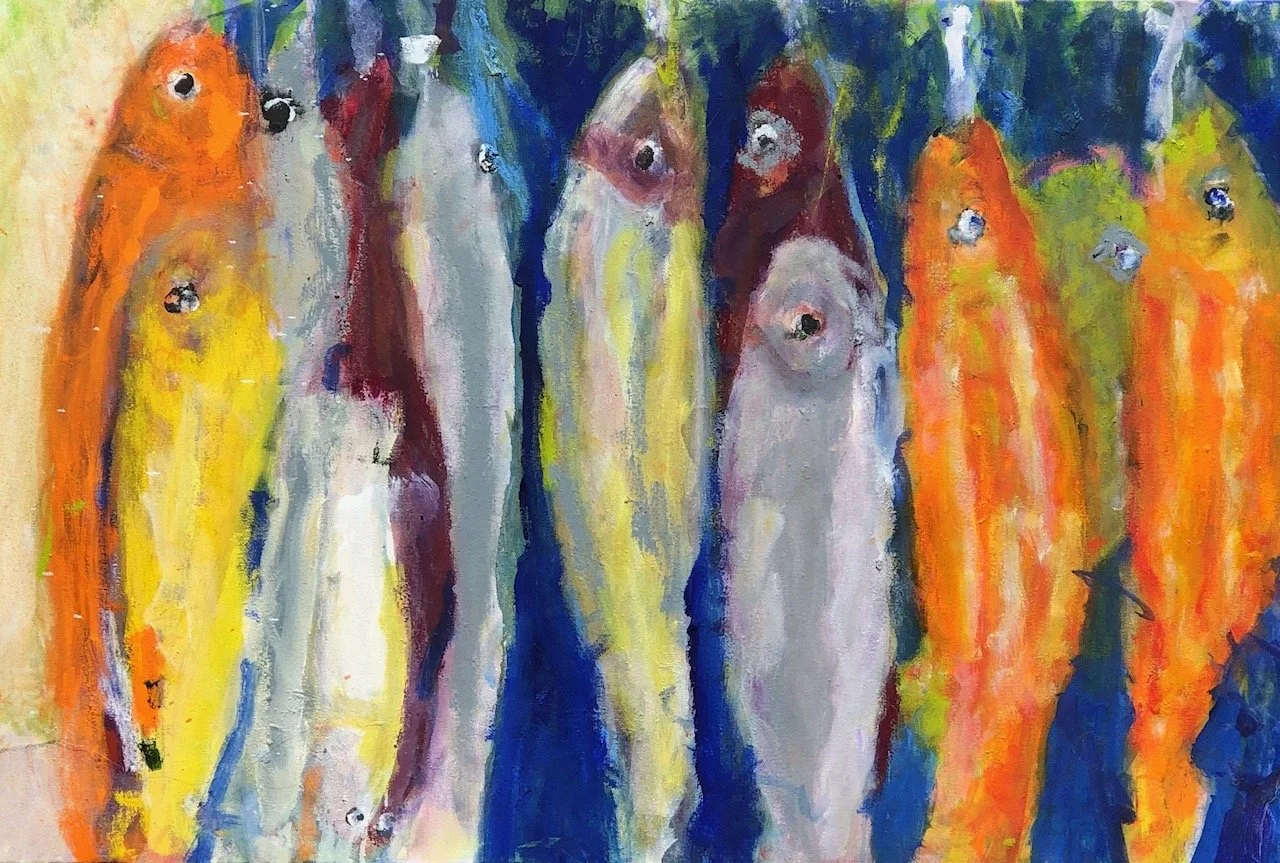
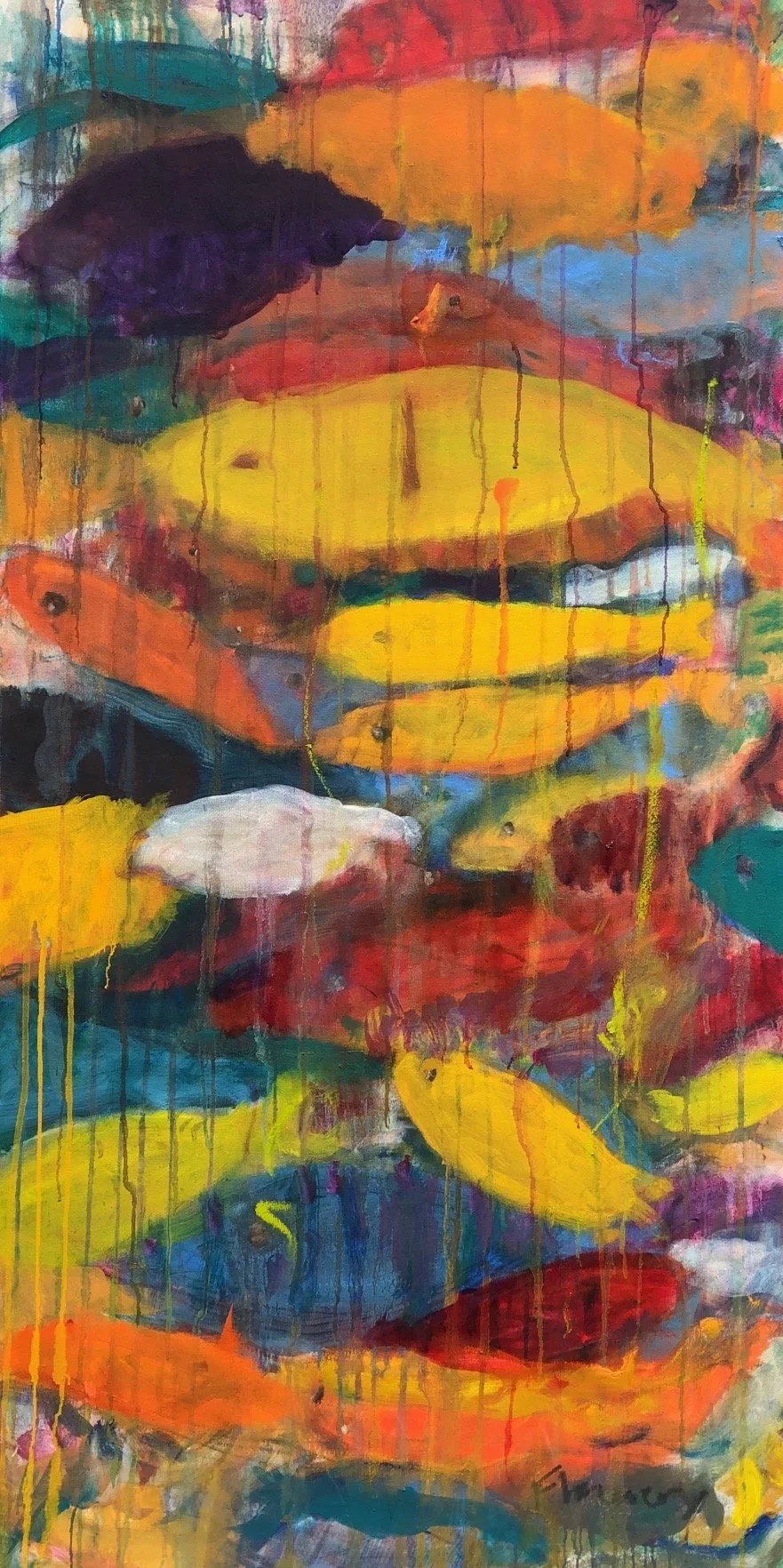
The fish belong to a parallel, imagined space—suggested rather than observed. Seen from above the surface, they represent what lies beyond reach and beneath awareness. Their forms drift through painted space with a sense of age and continuity, shaped more by intuition than by description.
Standing at the water’s edge has always carried a sense of return. There is calm in watching rather than entering, in remaining grounded while movement unfolds just beyond. The sea becomes a boundary and a presence—something encountered through reflection rather than immersion.
Together, the beach and fish paintings explore the relationship between observation and imagination, surface and depth. They occupy a space between the tangible and the inferred, inviting viewers to linger at the shoreline—where perception slows, memory gathers, and meaning quietly unfolds.