On Conquering Disability
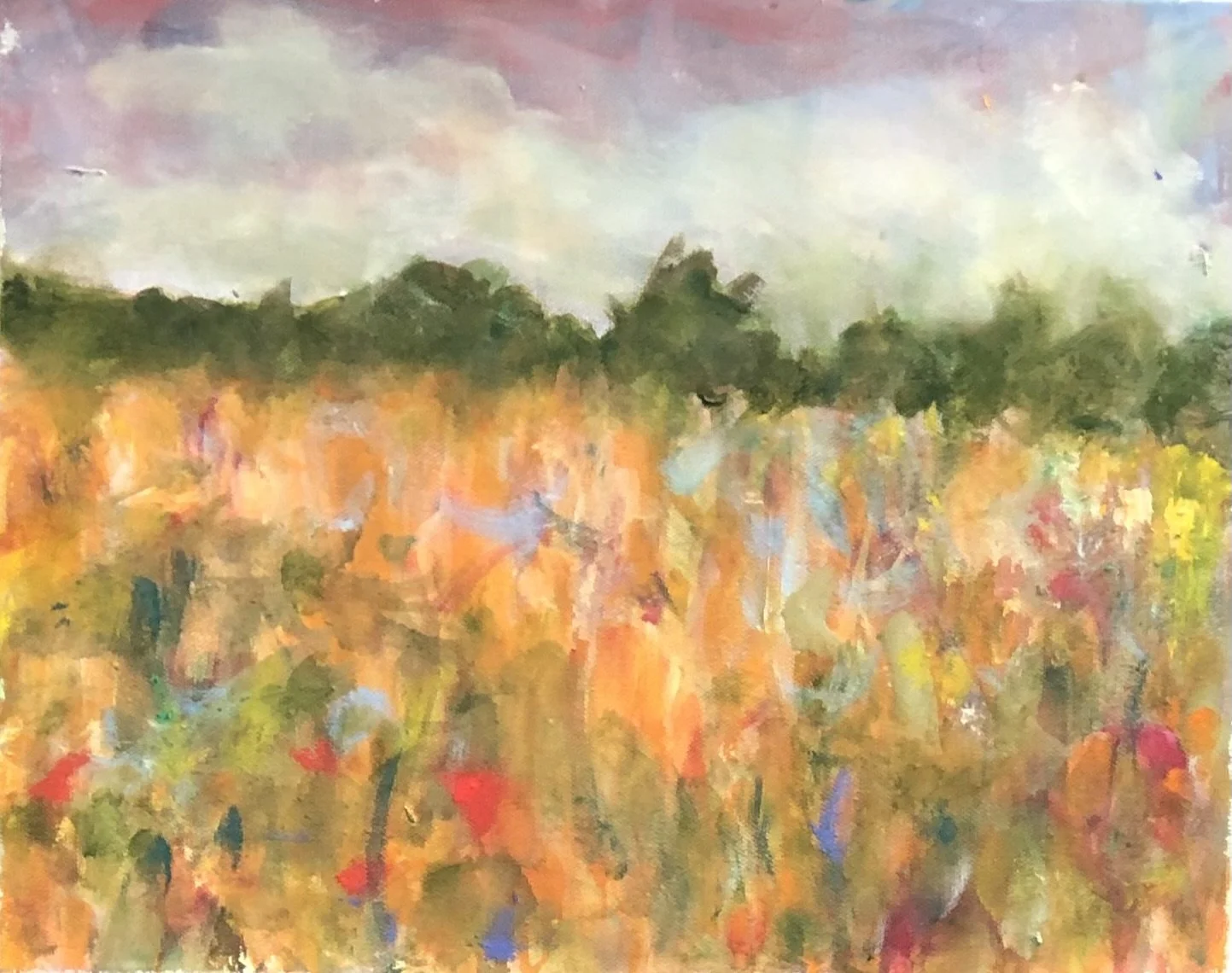
Painting for the Barrios Series
I have been a painter for more than five decades. For most of that time, multiple sclerosis has been present in my life. It has never kept me from being an artist, and it has never held the work back. I have continued to paint, to think, and to work at scale—on canvases six and eight feet square—without compromise.
The physical realities of making that work have never been something I faced alone. My mate has been there throughout, helping with the movement and placement of canvases, shaping workable studio environments, and managing the logistics of exhibitions. I think of him as a manager in the most practical sense. Many artists have managers; in my case, our partnership has been essential to sustaining the work as a whole.
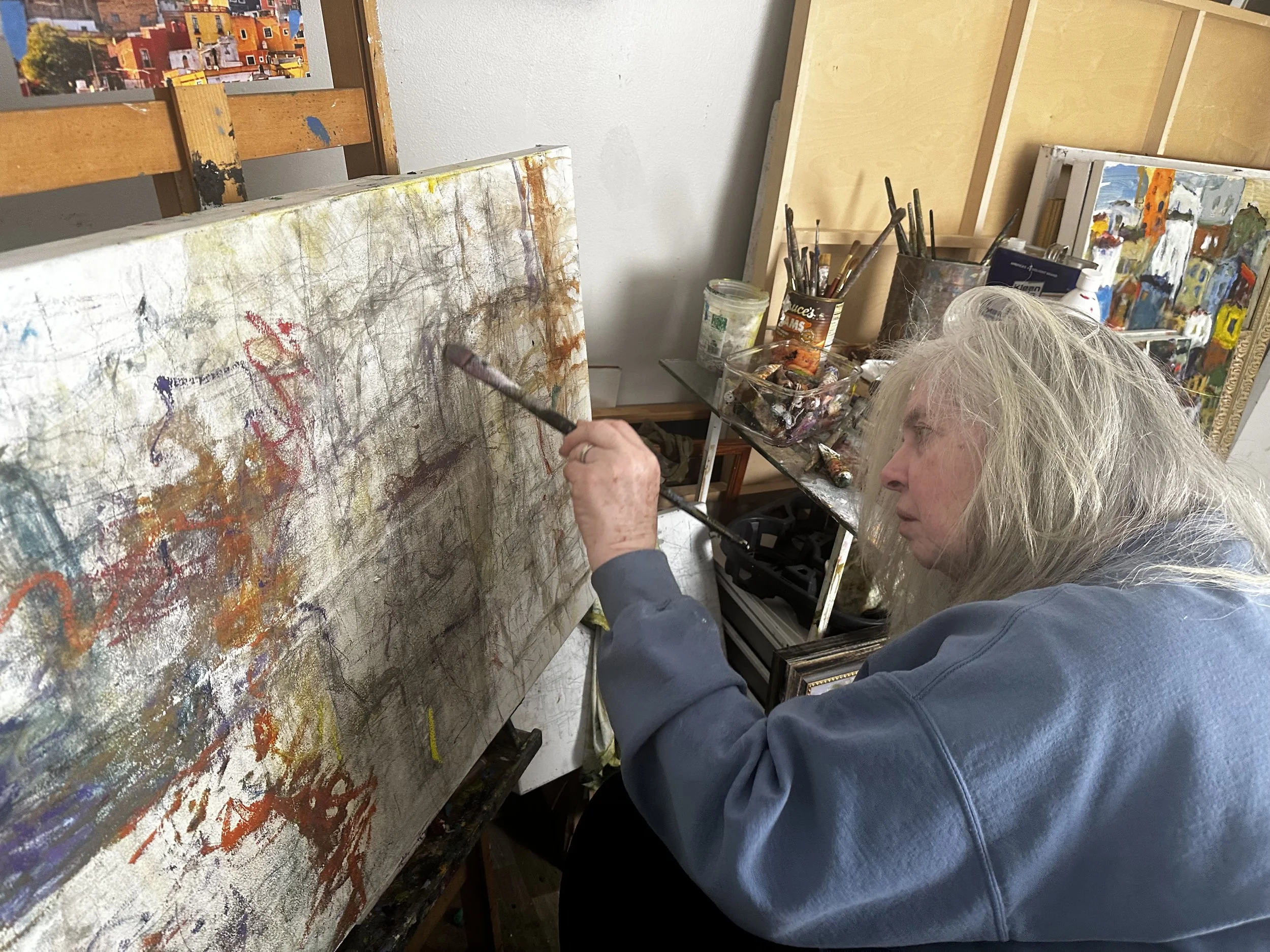
For many years, there was nothing standing between thought and surface. Then my hands began to change. Over the last several years, loss of fine motor control made precision more difficult, and the way I worked had to shift. Like many people who continue working through physical change, I adapted my tools rather than abandoning the work. I began to rely more heavily on paint sticks—dense, physical tools, closer to large-scale crayons—while continuing to use brushes when I can steady my hand.
I do not see this as a loss. I see it as an expansion. Paint sticks come with a limited palette, and that constraint is visible in the work, particularly in the Barrio paintings. There is a clear chromatic transition between the early Barrio chapters and the most recent ones. The color moves differently now. The limits leave a trace.
Rather than resist this change, I work with it. I use the tools I have and make them work on my terms. The materials may shift, but the impulse does not. Many people who live with long-term conditions understand this rhythm—adjustment, persistence, continuation. If anything, these constraints have opened new ground and brought fresh energy to the ongoing exploration. The work continues—altered, alive, and still unfolding.
I do not consider myself a handicapped artist. I consider myself an artist with a handicap—one part of a life that includes decades of making, adapting, and continuing to move forward.
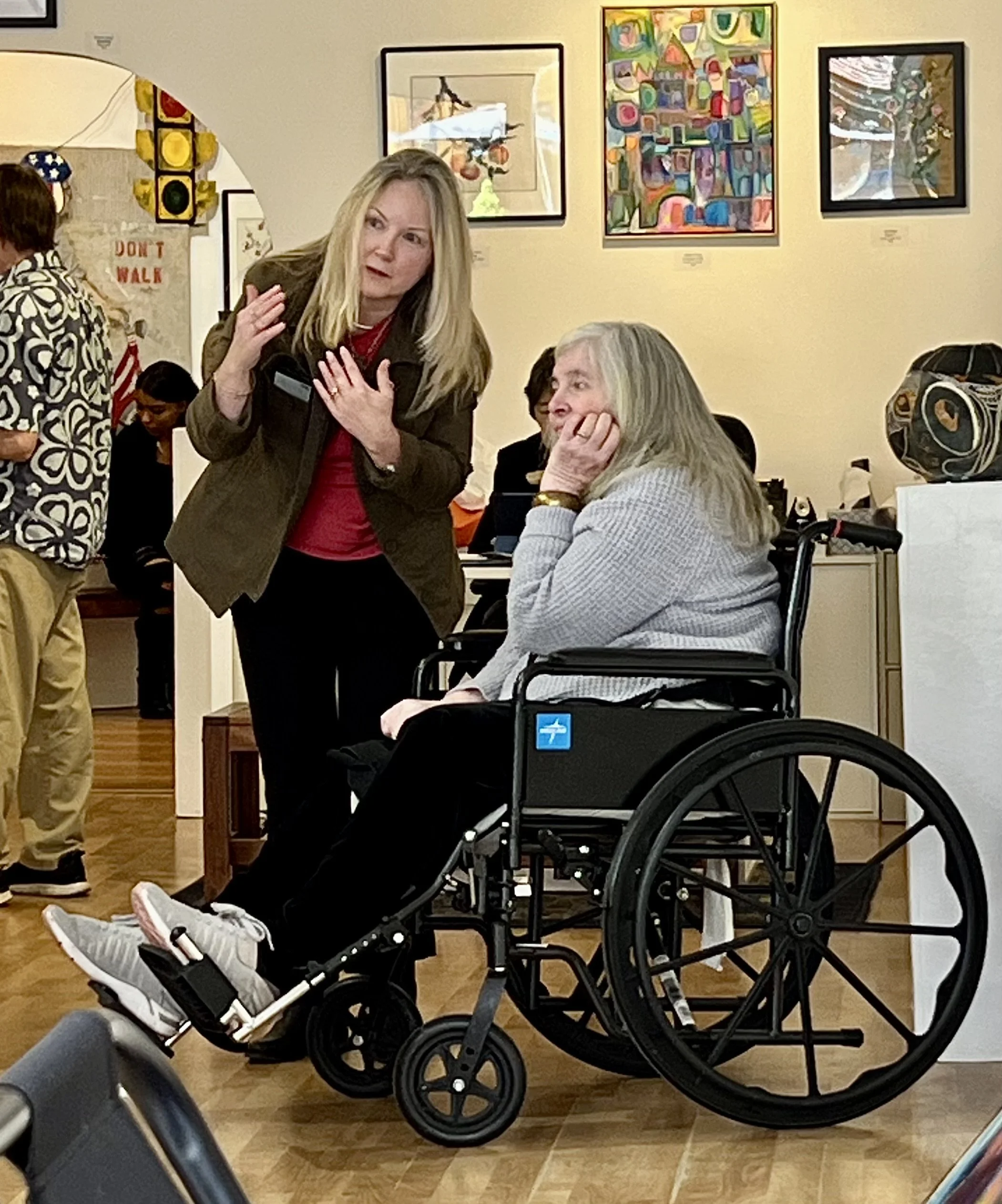
Kristine with fellow MS Traveler Lisa Domenic at their show opening reception at Third Street gallery Sunday, May 3rd, 2026