
I have devoted my life to the pursuit of art as a way of understanding and interpreting the world around me. My work moves through many landscapes, from dense city streets to open countryside, always searching for the energy and rhythm within place.
I invite you to explore these paintings with curiosity. I do not paint to meet outside expectations; each work begins from intuition, guided by emotion, memory, and observation. My hope is that you find something of your own experience reflected here — and if you find inspiration in these works, then the conversation between artist and viewer has already begun.
Discover Artistry That Transcends Time
Discover Artistry That Transcends Time
I have devoted my life to the pursuit of art as a way of understanding and interpreting the world around me. My work moves through many landscapes, from dense city streets to open countryside, always searching for the energy and rhythm within place.
I invite you to explore these paintings with curiosity. I do not paint to meet outside expectations; each work begins from intuition, guided by emotion, memory, and observation. My hope is that you find something of your own experience reflected here — and if you find inspiration in these works, then the conversation between artist and viewer has already begun.
Discover Artistry That Transcends Time
Discover Artistry That Transcends Time
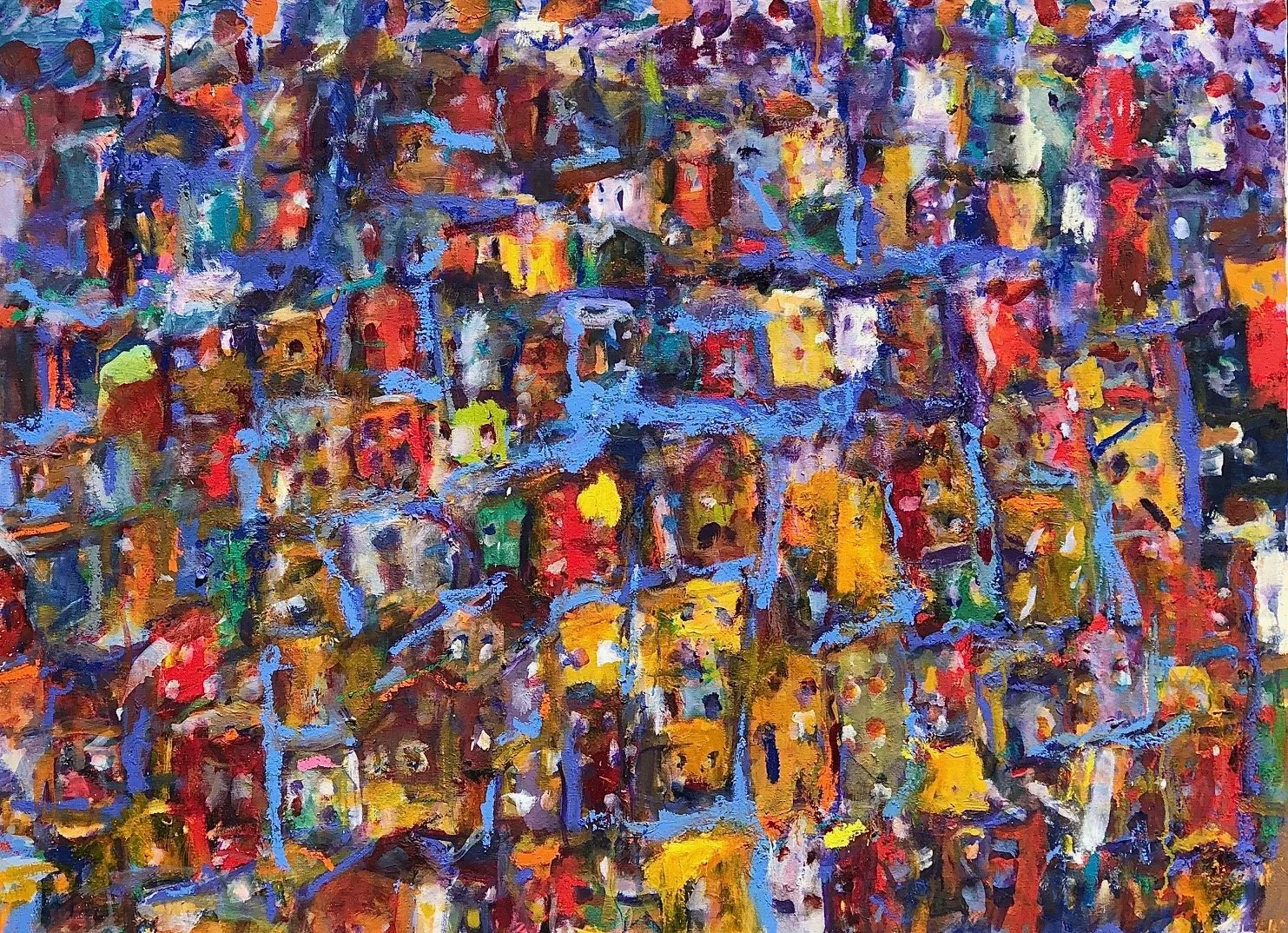
Background
I was born and raised in Center City Philadelphia, near the Franklin Institute in the Locust Square section. I studied at the Pennsylvania Academy of the Fine Arts and earned a Bachelor of Fine Arts from the University of Pennsylvania. While grounded in traditional training, my work has always followed an independent path, shaped as much by intuition as technique.
Early Work
My first serious paintings emerged from the view outside my Fairmount apartment—houses, windows, rooftops, and streets. Later, living high above the neighborhood at Parkway House expanded my perspective, leading to a series of cityscapes that explored place from both intimate and elevated viewpoints.
Evolution of Style
As my perspective widened, abstraction became central to my work. Cityscapes shifted from specific architectural details into flowing compositions that treat neighborhoods as living, breathing forms. Color and movement increasingly replaced strict representation.
Global Influences
In recent years, images of barrios from around the world—Port-au-Prince, Mexico, Peru, Chile, Rio de Janeiro, and beyond—have deeply resonated with me. These neighborhoods share a universal visual and emotional language, regardless of geography.
Current Work
My most recent paintings merge influences from Philadelphia’s neighborhoods with those from across the globe. Together, they reflect a shared human experience—distinct, interconnected, and alive.
Beyond the City
While cityscapes form the backbone of my work, they are not its boundaries. My paintings move outward into landscapes and florals, toward the beach and beneath the surface of the sea. Fish, water, and abstraction appear as recurring elements—quiet, rhythmic, and persistent. I return to these subjects again and again, drawn by their ability to shift between observation and feeling, grounding my work while allowing it to drift.
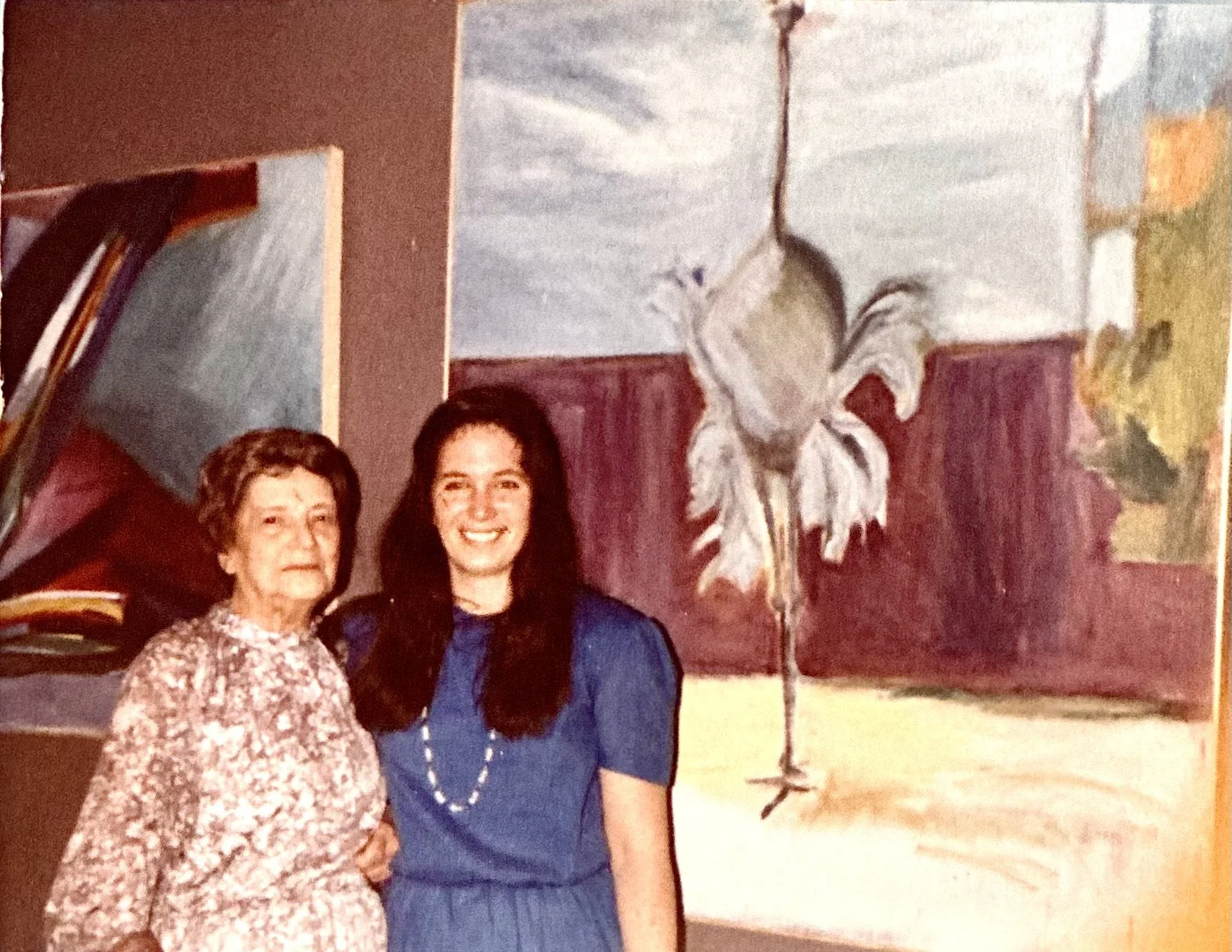
The first serious painting I ever painted was of an ostrich. It was exhibited at the Pennsylvania Academy of the Fine Arts during the Cresson Graduate Exhibition. In a grainy Polaroid from that moment, I am standing beside my grandmother—my Mom-Mom—with the painting hovering in the background, already beginning its own life.
She had been a flapper in the 1920s, part of a generation of young women who claimed their independence openly—cutting their hair short, listening to jazz, and defying the rigid codes of behavior that came before them. In her time, that too was a form of risk, a declaration made without asking permission. Standing next to her that day, I felt that same quiet inheritance: the courage to step outside expectation and trust one’s own instincts.
An ostrich may not seem like an obvious declaration of seriousness, especially among a room full of classically trained young artists. Yet the painting was purchased by a critic before the exhibition even opened. In that quiet, unexpected gesture, I understood something essential: that following instinct mattered more than conformity. The work did not ask for permission, and neither did I.
I took that as a sign. I trusted it. I never looked back.
Barrios: A Journey from My Front Door to a Global Understanding
Part I — Germination
This journey began close to home. As a young artist studying at the Pennsylvania Academy of the Fine Arts, I painted what was nearest — the view outside my window. Those early works formed a quiet beginning, a foundation that would eventually widen my way of seeing beyond what I could imagine at the time.
Part II — The View from Above
Motherhood brought me to an apartment twelve stories above Philadelphia’s Fairmount neighborhood — a dense rhythm of row houses and repeating blocks. From above, pattern and proximity began to shape my work. The city revealed itself as structure, movement, and community, influencing the paintings that followed.
Part III — The Seeds Burst Forth
Later, in the suburbs, those early impressions expanded. The focus shifted from houses and blocks to entire neighborhoods, and then to cities themselves. The paintings grew wider in scale, following a vision that had quietly taken root years before.
Part IV — Barrios
During the pandemic, and through the unexpected doorway of Pinterest, I encountered images of barrios from around the world. I was struck by their familiarity — as if they mirrored work I had already been painting. These images became a catalyst, opening the way to larger works and a broader understanding of place.
Part V — Toward a Global Understanding
The imagined places of my paintings began to meet the real world. Across continents, dense neighborhoods — often shaped by hardship — carried a shared energy and visual language. What inspires me is their vitality: living environments filled with motion, resilience, and human presence.
My work seeks to capture that kinetic sense of place — cities expanding, adapting, defining themselves through the lives within them. And yet density is not only struggle; it can also create belonging. Barrios, like so many neighborhoods in Philadelphia and throughout the world, become places of connection and pride — places where the human story gathers, settles, and calls itself home.
Barrios: A Journey from My Front Door to a Global Understanding
Part I — Germination
This journey began close to home. As a young artist studying at the Pennsylvania Academy of the Fine Arts, I painted what was nearest — the view outside my window. Those early works formed a quiet beginning, a foundation that would eventually widen my way of seeing beyond what I could imagine at the time.
Part II — The View from Above
Motherhood brought me to an apartment twelve stories above Philadelphia’s Fairmount neighborhood — a dense rhythm of row houses and repeating blocks. From above, pattern and proximity began to shape my work. The city revealed itself as structure, movement, and community, influencing the paintings that followed.
Part III — The Seeds Burst Forth
Later, in the suburbs, those early impressions expanded. The focus shifted from houses and blocks to entire neighborhoods, and then to cities themselves. The paintings grew wider in scale, following a vision that had quietly taken root years before.
Part IV — Barrios
During the pandemic, and through the unexpected doorway of Pinterest, I encountered images of barrios from around the world. I was struck by their familiarity — as if they mirrored work I had already been painting. These images became a catalyst, opening the way to larger works and a broader understanding of place.
Part V — Toward a Global Understanding
The imagined places of my paintings began to meet the real world. Across continents, dense neighborhoods — often shaped by hardship — carried a shared energy and visual language. What inspires me is their vitality: living environments filled with motion, resilience, and human presence.
My work seeks to capture that kinetic sense of place — cities expanding, adapting, defining themselves through the lives within them. And yet density is not only struggle; it can also create belonging. Barrios, like so many neighborhoods in Philadelphia and throughout the world, become places of connection and pride — places where the human story gathers, settles, and calls itself home.
Barrios: A Journey from My Front Door to a Global Understanding
Part I — Germination
This journey began close to home. As a young artist studying at the Pennsylvania Academy of the Fine Arts, I painted what was nearest — the view outside my window. Those early works formed a quiet beginning, a foundation that would eventually widen my way of seeing beyond what I could imagine at the time.
Part II — The View from Above
Motherhood brought me to an apartment twelve stories above Philadelphia’s Fairmount neighborhood — a dense rhythm of row houses and repeating blocks. From above, pattern and proximity began to shape my work. The city revealed itself as structure, movement, and community, influencing the paintings that followed.
Part III — The Seeds Burst Forth
Later, in the suburbs, those early impressions expanded. The focus shifted from houses and blocks to entire neighborhoods, and then to cities themselves. The paintings grew wider in scale, following a vision that had quietly taken root years before.
Part IV — Barrios
During the pandemic, and through the unexpected doorway of Pinterest, I encountered images of barrios from around the world. I was struck by their familiarity — as if they mirrored work I had already been painting. These images became a catalyst, opening the way to larger works and a broader understanding of place.
Part V — Toward a Global Understanding
The imagined places of my paintings began to meet the real world. Across continents, dense neighborhoods — often shaped by hardship — carried a shared energy and visual language. What inspires me is their vitality: living environments filled with motion, resilience, and human presence.
My work seeks to capture that kinetic sense of place — cities expanding, adapting, defining themselves through the lives within them. And yet density is not only struggle; it can also create belonging. Barrios, like so many neighborhoods in Philadelphia and throughout the world, become places of connection and pride — places where the human story gathers, settles, and calls itself home.
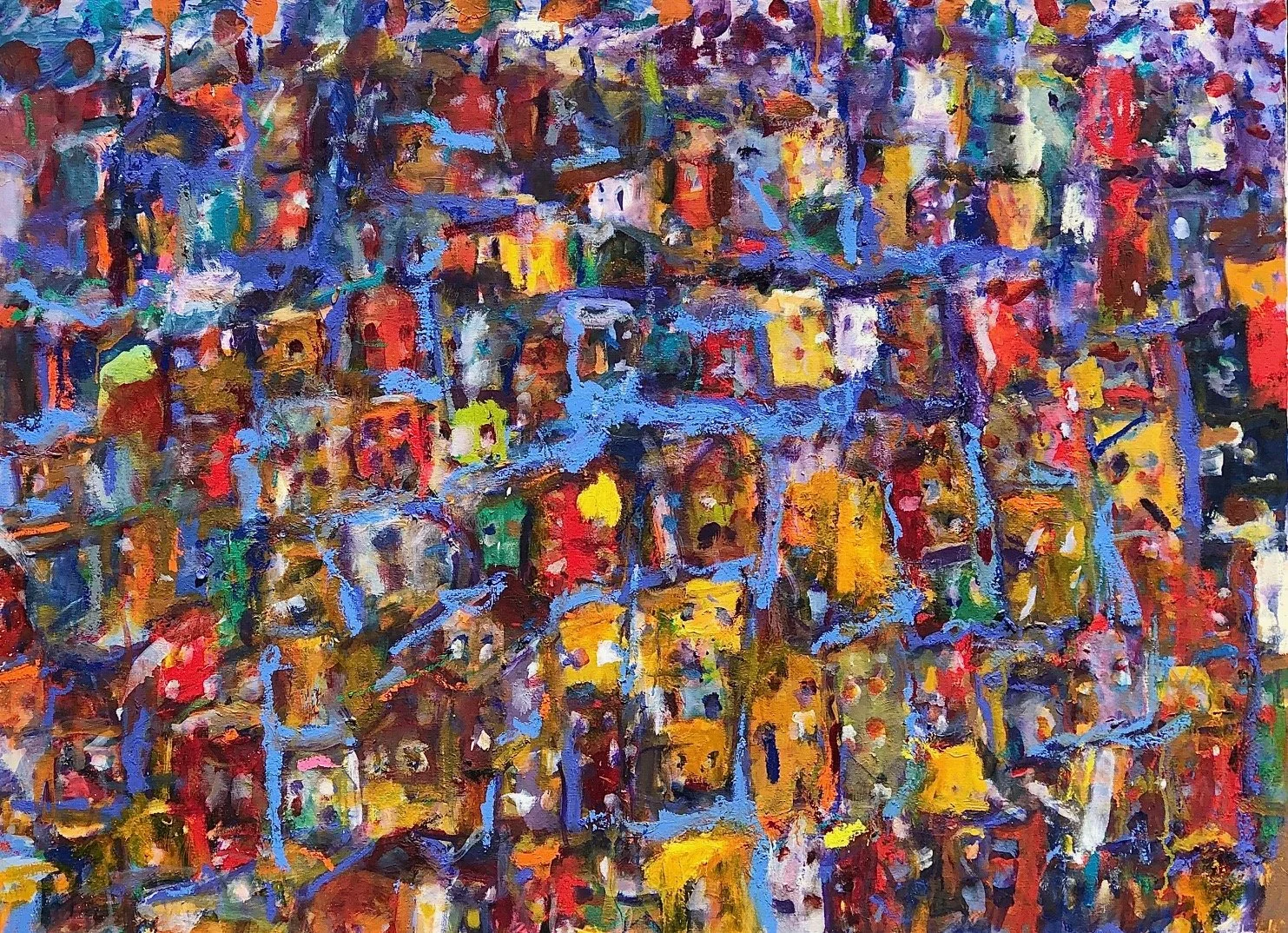
Oil on Canvas 36 × 48”
Original is available for purchase upon request.
Board print images are printed on museum quality poster board and are suitable for framing
Photographic prints are high quality photographic prints mounted onto 1” thick foam core with edge banding
The shop page presents a detail from the painting. To see the entire image please return to the Cityscape or Barrio Revelations Gallery page
Oil on Canvas 36 × 48”
Original is available for purchase upon request.
Board print images are printed on museum quality poster board and are suitable for framing
Photographic prints are high quality photographic prints mounted onto 1” thick foam core with edge banding
The shop page presents a detail from the painting. To see the entire image please return to the Cityscape or Barrio Revelations Gallery page
Oil on Canvas 36 × 48”
Original is available for purchase upon request.
Board print images are printed on museum quality poster board and are suitable for framing
Photographic prints are high quality photographic prints mounted onto 1” thick foam core with edge banding
The shop page presents a detail from the painting. To see the entire image please return to the Cityscape or Barrio Revelations Gallery page
Evolution I — The First View
The work begins with what was immediately visible: rooftops pressed together, windows stacked in quiet repetition, streets observed from a single window in Philadelphia. These early views were not chosen for drama but for proximity. Living inside the city meant absorbing it slowly, day after day. What seemed ordinary revealed itself as structure, pattern, and possibility. These paintings mark the beginning of seeing the city not as backdrop, but as subject.
Evolution II — Rising Above
A shift in elevation brought a shift in understanding. Seen from above, the city loosened its edges. Individual buildings surrendered to density, and detail gave way to rhythm. Streets became lines of movement; neighborhoods became fields of energy. Perspective expanded, and with it the idea that place could be understood not only by what it is, but by how it moves and connects.
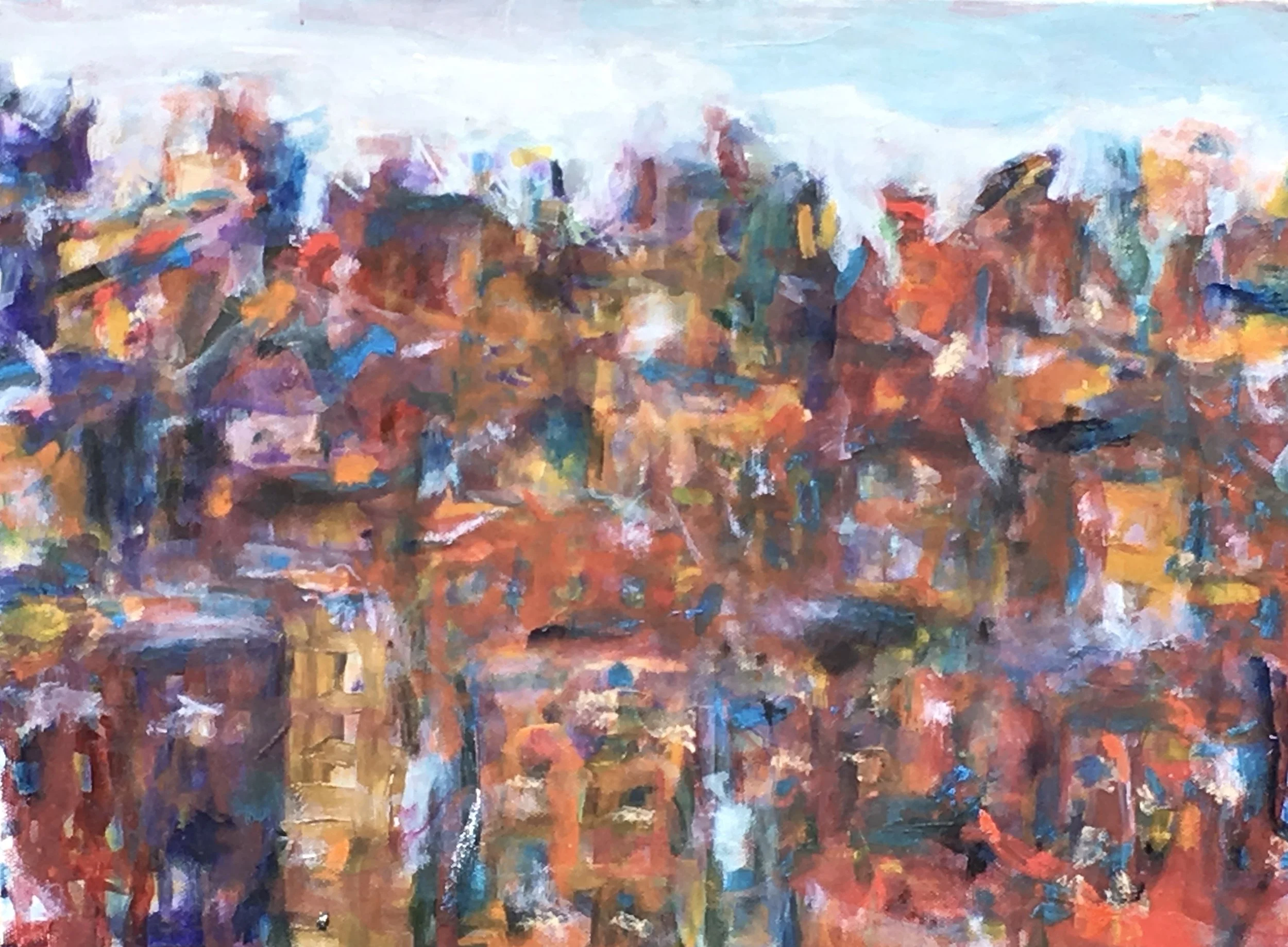
Digital Print
Board print images are printed on museum quality poster board and are suitable for framing
Photographic prints are high quality photographic prints mounted onto 1” thick foam core with edge banding
Giclee Prints on Artist Grade Canvas available upon request.
The shop page may present a detail from the painting. To see the entire image please return to the Barrio Revelations Gallery page
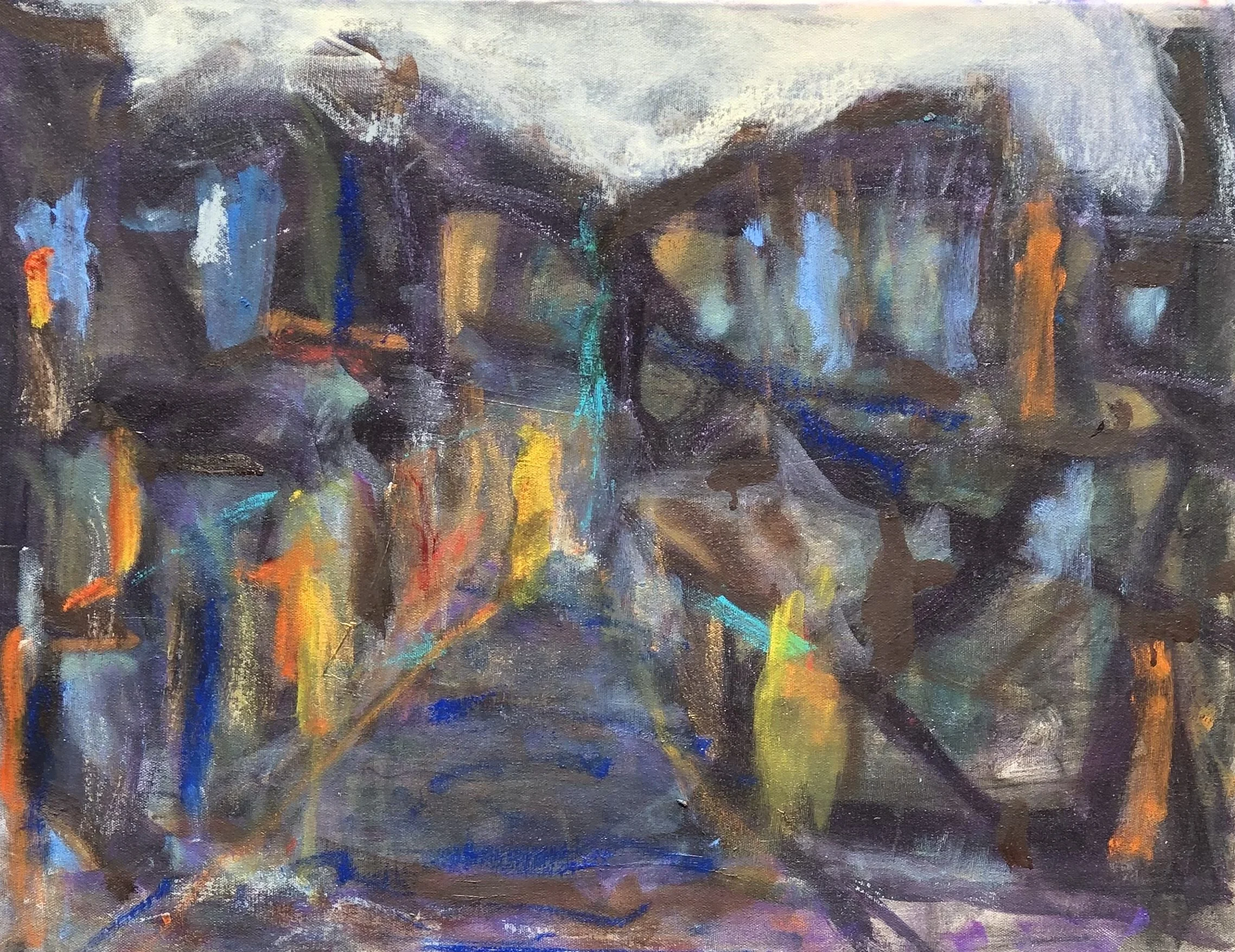
Oil on Canvas - 18 × 24”"
Original is available upon request.
Board print images are printed on museum quality poster board and are suitable for framing
Photographic prints are high quality photographic prints mounted onto 1” thick foam core with edge banding
The shop page presents a detail from the painting. To see the entire image please return to the Abstracts Gallery page
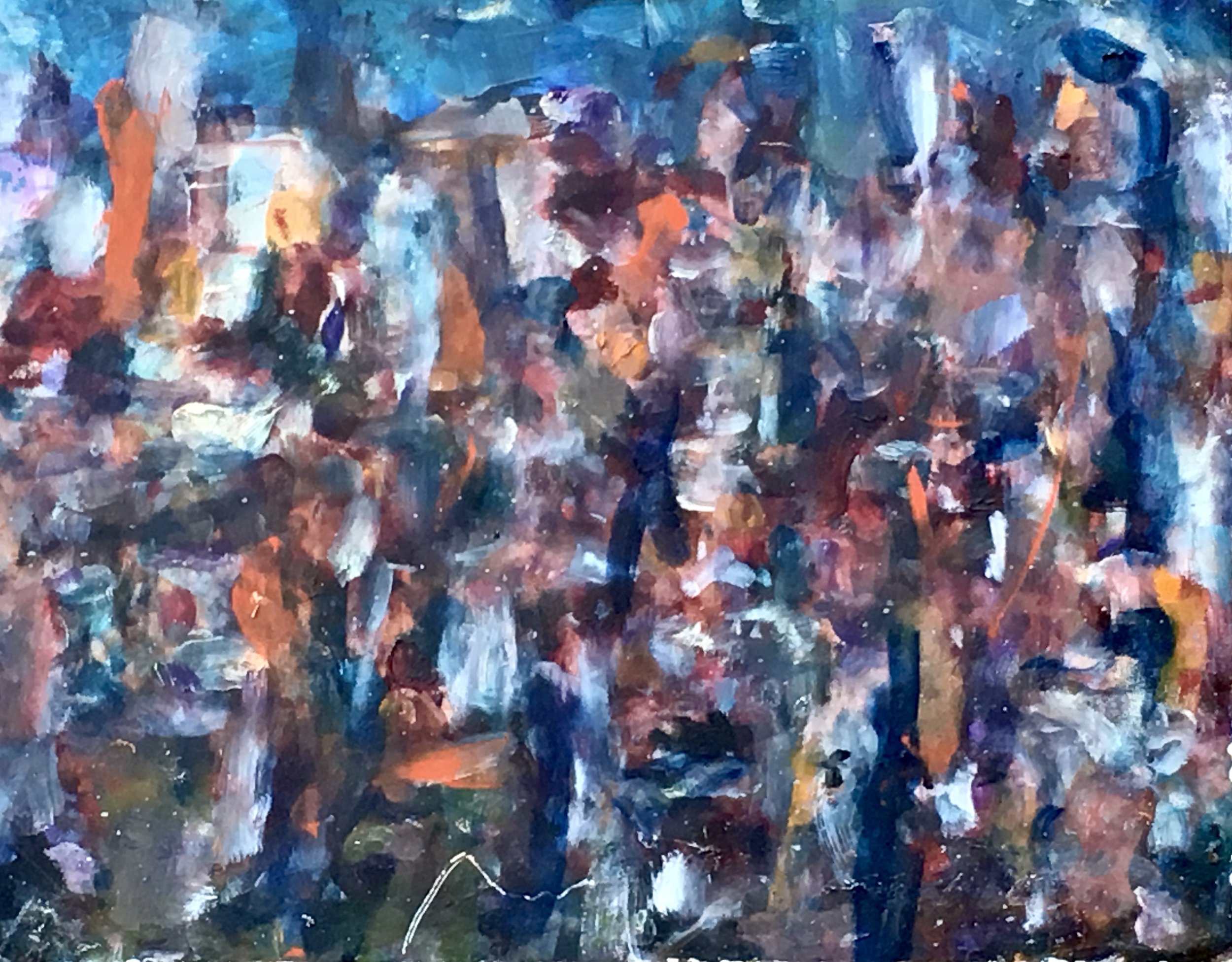
Oil on Canvas 12 × 16"
Original is in a private collection.
Board print images are printed on museum quality poster board and are suitable for framing
Photographic prints are high quality photographic prints mounted onto 1” thick foam core with edge banding
The shop page presents a detail from the painting. To see the entire image please return to the Cityscape gallery.
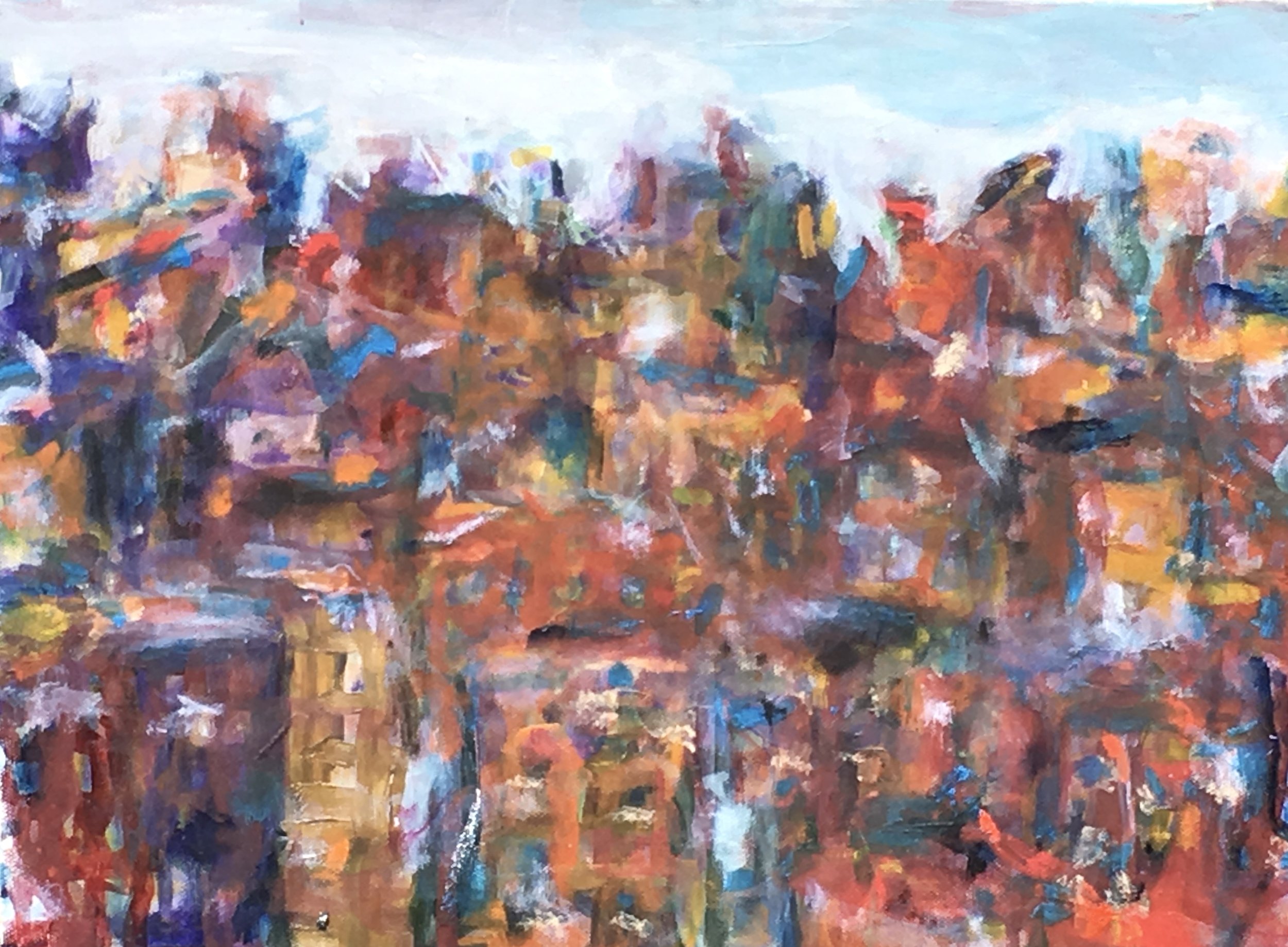
Oil on Canvas 24 × 36"
Original is available for purchase upon request.
Board print images are printed on museum quality poster board and are suitable for framing
Photographic prints are high quality photographic prints mounted onto 1” thick foam core with edge banding
The shop page presents a detail from the painting. To see the entire image please return to the Cityscape gallery.
Oil on Canvas 36 × 48”
Original is available for purchase upon request.
Board print images are printed on museum quality poster board and are suitable for framing
Photographic prints are high quality photographic prints mounted onto 1” thick foam core with edge banding
The shop page presents a detail from the painting. To see the entire image please return to the Cityscape or Barrio Revelations Gallery page
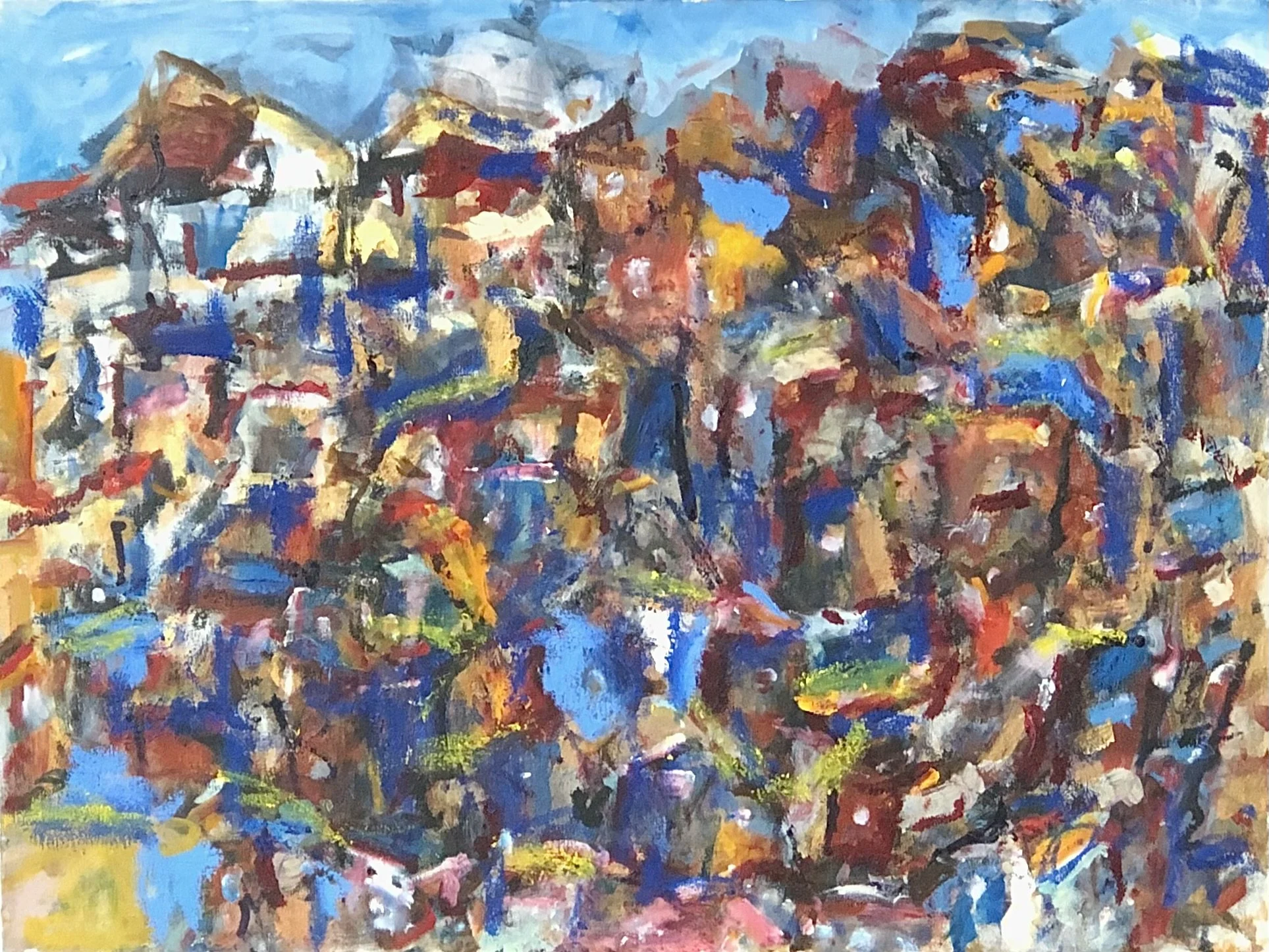
Oil on Canvas 24 × 36”
Original is available for purchase upon request.
Board print images are printed on museum quality poster board and are suitable for framing
Photographic prints are high quality photographic prints mounted onto 1” thick foam core with edge banding
The shop page presents a detail from the painting. To see the entire image please return to the Cityscape or Barrio Gallery page
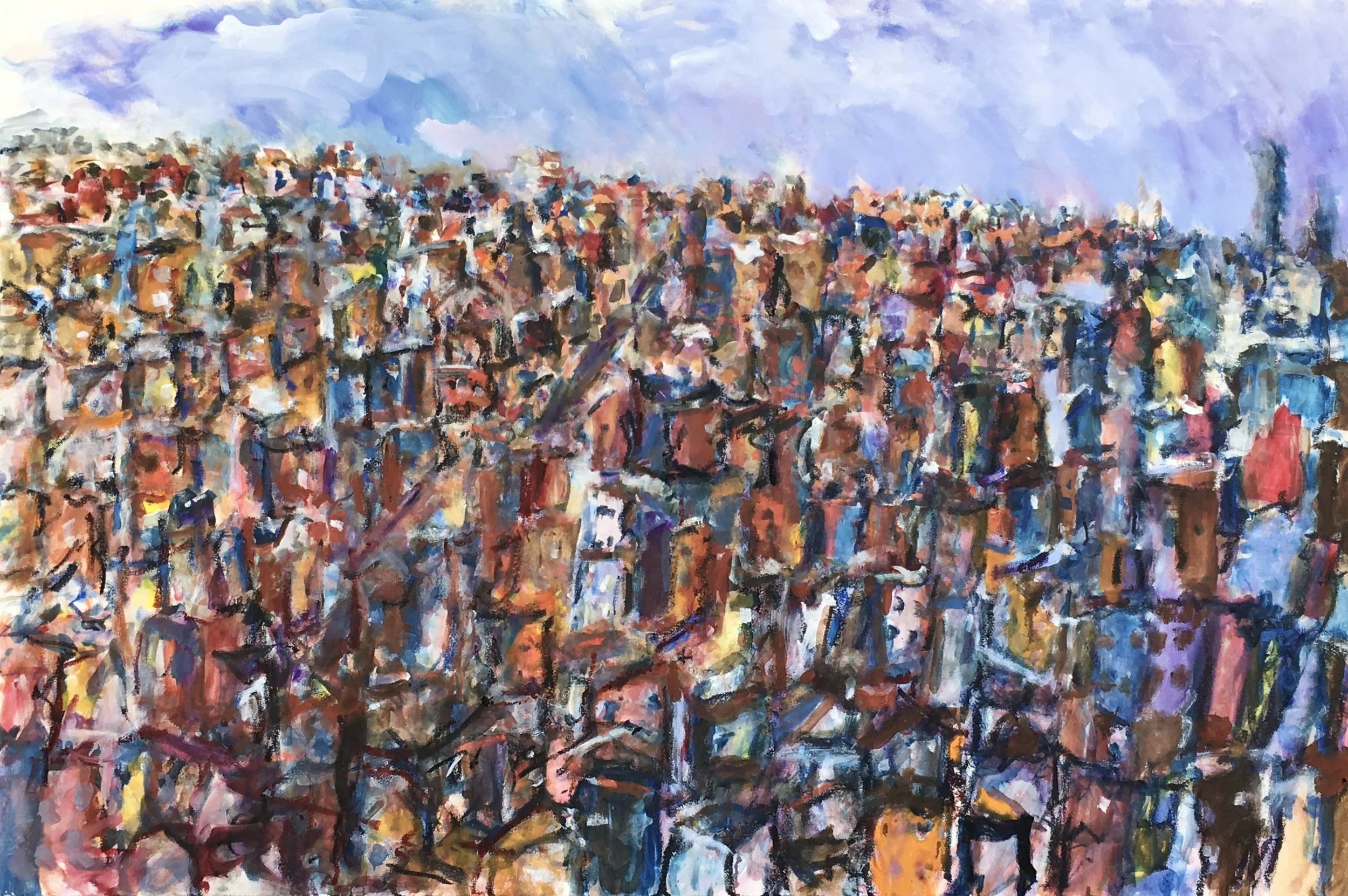
Digital Print
Board print images are printed on museum quality poster board and are suitable for framing
Photographic prints are high quality photographic prints mounted onto 1” thick foam core with edge banding
Giclee Prints on Artist Grade Canvas available upon request.
The shop page may present a detail from the painting. To see the entire image please return to the Barrio Revelations Gallery page
Evolution I — The First View
The work begins with what was immediately visible: rooftops pressed together, windows stacked in quiet repetition, streets observed from a single window in Philadelphia. These early views were not chosen for drama but for proximity. Living inside the city meant absorbing it slowly, day after day. What seemed ordinary revealed itself as structure, pattern, and possibility. These paintings mark the beginning of seeing the city not as backdrop, but as subject.
Evolution II — Rising Above
A shift in elevation brought a shift in understanding. Seen from above, the city loosened its edges. Individual buildings surrendered to density, and detail gave way to rhythm. Streets became lines of movement; neighborhoods became fields of energy. Perspective expanded, and with it the idea that place could be understood not only by what it is, but by how it moves and connects.
Digital Print
Board print images are printed on museum quality poster board and are suitable for framing
Photographic prints are high quality photographic prints mounted onto 1” thick foam core with edge banding
Giclee Prints on Artist Grade Canvas available upon request.
The shop page may present a detail from the painting. To see the entire image please return to the Barrio Revelations Gallery page
Oil on Canvas - 18 × 24”"
Original is available upon request.
Board print images are printed on museum quality poster board and are suitable for framing
Photographic prints are high quality photographic prints mounted onto 1” thick foam core with edge banding
The shop page presents a detail from the painting. To see the entire image please return to the Abstracts Gallery page
Oil on Canvas 12 × 16"
Original is in a private collection.
Board print images are printed on museum quality poster board and are suitable for framing
Photographic prints are high quality photographic prints mounted onto 1” thick foam core with edge banding
The shop page presents a detail from the painting. To see the entire image please return to the Cityscape gallery.
Oil on Canvas 24 × 36"
Original is available for purchase upon request.
Board print images are printed on museum quality poster board and are suitable for framing
Photographic prints are high quality photographic prints mounted onto 1” thick foam core with edge banding
The shop page presents a detail from the painting. To see the entire image please return to the Cityscape gallery.
Oil on Canvas 36 × 48”
Original is available for purchase upon request.
Board print images are printed on museum quality poster board and are suitable for framing
Photographic prints are high quality photographic prints mounted onto 1” thick foam core with edge banding
The shop page presents a detail from the painting. To see the entire image please return to the Cityscape or Barrio Revelations Gallery page
Oil on Canvas 24 × 36”
Original is available for purchase upon request.
Board print images are printed on museum quality poster board and are suitable for framing
Photographic prints are high quality photographic prints mounted onto 1” thick foam core with edge banding
The shop page presents a detail from the painting. To see the entire image please return to the Cityscape or Barrio Gallery page
Digital Print
Board print images are printed on museum quality poster board and are suitable for framing
Photographic prints are high quality photographic prints mounted onto 1” thick foam core with edge banding
Giclee Prints on Artist Grade Canvas available upon request.
The shop page may present a detail from the painting. To see the entire image please return to the Barrio Revelations Gallery page
Evolution I — The First View
The work begins with what was immediately visible: rooftops pressed together, windows stacked in quiet repetition, streets observed from a single window in Philadelphia. These early views were not chosen for drama but for proximity. Living inside the city meant absorbing it slowly, day after day. What seemed ordinary revealed itself as structure, pattern, and possibility. These paintings mark the beginning of seeing the city not as backdrop, but as subject.
Evolution II — Rising Above
A shift in elevation brought a shift in understanding. Seen from above, the city loosened its edges. Individual buildings surrendered to density, and detail gave way to rhythm. Streets became lines of movement; neighborhoods became fields of energy. Perspective expanded, and with it the idea that place could be understood not only by what it is, but by how it moves and connects.
Digital Print
Board print images are printed on museum quality poster board and are suitable for framing
Photographic prints are high quality photographic prints mounted onto 1” thick foam core with edge banding
Giclee Prints on Artist Grade Canvas available upon request.
The shop page may present a detail from the painting. To see the entire image please return to the Barrio Revelations Gallery page
Oil on Canvas - 18 × 24”"
Original is available upon request.
Board print images are printed on museum quality poster board and are suitable for framing
Photographic prints are high quality photographic prints mounted onto 1” thick foam core with edge banding
The shop page presents a detail from the painting. To see the entire image please return to the Abstracts Gallery page
Oil on Canvas 12 × 16"
Original is in a private collection.
Board print images are printed on museum quality poster board and are suitable for framing
Photographic prints are high quality photographic prints mounted onto 1” thick foam core with edge banding
The shop page presents a detail from the painting. To see the entire image please return to the Cityscape gallery.
Oil on Canvas 24 × 36"
Original is available for purchase upon request.
Board print images are printed on museum quality poster board and are suitable for framing
Photographic prints are high quality photographic prints mounted onto 1” thick foam core with edge banding
The shop page presents a detail from the painting. To see the entire image please return to the Cityscape gallery.
Oil on Canvas 36 × 48”
Original is available for purchase upon request.
Board print images are printed on museum quality poster board and are suitable for framing
Photographic prints are high quality photographic prints mounted onto 1” thick foam core with edge banding
The shop page presents a detail from the painting. To see the entire image please return to the Cityscape or Barrio Revelations Gallery page
Oil on Canvas 24 × 36”
Original is available for purchase upon request.
Board print images are printed on museum quality poster board and are suitable for framing
Photographic prints are high quality photographic prints mounted onto 1” thick foam core with edge banding
The shop page presents a detail from the painting. To see the entire image please return to the Cityscape or Barrio Gallery page
Digital Print
Board print images are printed on museum quality poster board and are suitable for framing
Photographic prints are high quality photographic prints mounted onto 1” thick foam core with edge banding
Giclee Prints on Artist Grade Canvas available upon request.
The shop page may present a detail from the painting. To see the entire image please return to the Barrio Revelations Gallery page
Evolution I — The First View
The work begins with what was immediately visible: rooftops pressed together, windows stacked in quiet repetition, streets observed from a single window in Philadelphia. These early views were not chosen for drama but for proximity. Living inside the city meant absorbing it slowly, day after day. What seemed ordinary revealed itself as structure, pattern, and possibility. These paintings mark the beginning of seeing the city not as backdrop, but as subject.
Evolution II — Rising Above
A shift in elevation brought a shift in understanding. Seen from above, the city loosened its edges. Individual buildings surrendered to density, and detail gave way to rhythm. Streets became lines of movement; neighborhoods became fields of energy. Perspective expanded, and with it the idea that place could be understood not only by what it is, but by how it moves and connects.
Digital Print
Board print images are printed on museum quality poster board and are suitable for framing
Photographic prints are high quality photographic prints mounted onto 1” thick foam core with edge banding
Giclee Prints on Artist Grade Canvas available upon request.
The shop page may present a detail from the painting. To see the entire image please return to the Barrio Revelations Gallery page
Oil on Canvas - 18 × 24”"
Original is available upon request.
Board print images are printed on museum quality poster board and are suitable for framing
Photographic prints are high quality photographic prints mounted onto 1” thick foam core with edge banding
The shop page presents a detail from the painting. To see the entire image please return to the Abstracts Gallery page
Oil on Canvas 12 × 16"
Original is in a private collection.
Board print images are printed on museum quality poster board and are suitable for framing
Photographic prints are high quality photographic prints mounted onto 1” thick foam core with edge banding
The shop page presents a detail from the painting. To see the entire image please return to the Cityscape gallery.
Oil on Canvas 24 × 36"
Original is available for purchase upon request.
Board print images are printed on museum quality poster board and are suitable for framing
Photographic prints are high quality photographic prints mounted onto 1” thick foam core with edge banding
The shop page presents a detail from the painting. To see the entire image please return to the Cityscape gallery.
Oil on Canvas 36 × 48”
Original is available for purchase upon request.
Board print images are printed on museum quality poster board and are suitable for framing
Photographic prints are high quality photographic prints mounted onto 1” thick foam core with edge banding
The shop page presents a detail from the painting. To see the entire image please return to the Cityscape or Barrio Revelations Gallery page
Oil on Canvas 24 × 36”
Original is available for purchase upon request.
Board print images are printed on museum quality poster board and are suitable for framing
Photographic prints are high quality photographic prints mounted onto 1” thick foam core with edge banding
The shop page presents a detail from the painting. To see the entire image please return to the Cityscape or Barrio Gallery page
Digital Print
Board print images are printed on museum quality poster board and are suitable for framing
Photographic prints are high quality photographic prints mounted onto 1” thick foam core with edge banding
Giclee Prints on Artist Grade Canvas available upon request.
The shop page may present a detail from the painting. To see the entire image please return to the Barrio Revelations Gallery page
Evolution I — The First View
The work begins with what was immediately visible: rooftops pressed together, windows stacked in quiet repetition, streets observed from a single window in Philadelphia. These early views were not chosen for drama but for proximity. Living inside the city meant absorbing it slowly, day after day. What seemed ordinary revealed itself as structure, pattern, and possibility. These paintings mark the beginning of seeing the city not as backdrop, but as subject.
Evolution II — Rising Above
A shift in elevation brought a shift in understanding. Seen from above, the city loosened its edges. Individual buildings surrendered to density, and detail gave way to rhythm. Streets became lines of movement; neighborhoods became fields of energy. Perspective expanded, and with it the idea that place could be understood not only by what it is, but by how it moves and connects.
Digital Print
Board print images are printed on museum quality poster board and are suitable for framing
Photographic prints are high quality photographic prints mounted onto 1” thick foam core with edge banding
Giclee Prints on Artist Grade Canvas available upon request.
The shop page may present a detail from the painting. To see the entire image please return to the Barrio Revelations Gallery page
Oil on Canvas - 18 × 24”"
Original is available upon request.
Board print images are printed on museum quality poster board and are suitable for framing
Photographic prints are high quality photographic prints mounted onto 1” thick foam core with edge banding
The shop page presents a detail from the painting. To see the entire image please return to the Abstracts Gallery page
Oil on Canvas 12 × 16"
Original is in a private collection.
Board print images are printed on museum quality poster board and are suitable for framing
Photographic prints are high quality photographic prints mounted onto 1” thick foam core with edge banding
The shop page presents a detail from the painting. To see the entire image please return to the Cityscape gallery.
Oil on Canvas 24 × 36"
Original is available for purchase upon request.
Board print images are printed on museum quality poster board and are suitable for framing
Photographic prints are high quality photographic prints mounted onto 1” thick foam core with edge banding
The shop page presents a detail from the painting. To see the entire image please return to the Cityscape gallery.
Oil on Canvas 36 × 48”
Original is available for purchase upon request.
Board print images are printed on museum quality poster board and are suitable for framing
Photographic prints are high quality photographic prints mounted onto 1” thick foam core with edge banding
The shop page presents a detail from the painting. To see the entire image please return to the Cityscape or Barrio Revelations Gallery page
Oil on Canvas 24 × 36”
Original is available for purchase upon request.
Board print images are printed on museum quality poster board and are suitable for framing
Photographic prints are high quality photographic prints mounted onto 1” thick foam core with edge banding
The shop page presents a detail from the painting. To see the entire image please return to the Cityscape or Barrio Gallery page
Digital Print
Board print images are printed on museum quality poster board and are suitable for framing
Photographic prints are high quality photographic prints mounted onto 1” thick foam core with edge banding
Giclee Prints on Artist Grade Canvas available upon request.
The shop page may present a detail from the painting. To see the entire image please return to the Barrio Revelations Gallery page
Evolution I — The First View
The work begins with what was immediately visible: rooftops pressed together, windows stacked in quiet repetition, streets observed from a single window in Philadelphia. These early views were not chosen for drama but for proximity. Living inside the city meant absorbing it slowly, day after day. What seemed ordinary revealed itself as structure, pattern, and possibility. These paintings mark the beginning of seeing the city not as backdrop, but as subject.
Evolution II — Rising Above
A shift in elevation brought a shift in understanding. Seen from above, the city loosened its edges. Individual buildings surrendered to density, and detail gave way to rhythm. Streets became lines of movement; neighborhoods became fields of energy. Perspective expanded, and with it the idea that place could be understood not only by what it is, but by how it moves and connects.
Digital Print
Board print images are printed on museum quality poster board and are suitable for framing
Photographic prints are high quality photographic prints mounted onto 1” thick foam core with edge banding
Giclee Prints on Artist Grade Canvas available upon request.
The shop page may present a detail from the painting. To see the entire image please return to the Barrio Revelations Gallery page
Oil on Canvas - 18 × 24”"
Original is available upon request.
Board print images are printed on museum quality poster board and are suitable for framing
Photographic prints are high quality photographic prints mounted onto 1” thick foam core with edge banding
The shop page presents a detail from the painting. To see the entire image please return to the Abstracts Gallery page
Oil on Canvas 12 × 16"
Original is in a private collection.
Board print images are printed on museum quality poster board and are suitable for framing
Photographic prints are high quality photographic prints mounted onto 1” thick foam core with edge banding
The shop page presents a detail from the painting. To see the entire image please return to the Cityscape gallery.
Oil on Canvas 24 × 36"
Original is available for purchase upon request.
Board print images are printed on museum quality poster board and are suitable for framing
Photographic prints are high quality photographic prints mounted onto 1” thick foam core with edge banding
The shop page presents a detail from the painting. To see the entire image please return to the Cityscape gallery.
Oil on Canvas 36 × 48”
Original is available for purchase upon request.
Board print images are printed on museum quality poster board and are suitable for framing
Photographic prints are high quality photographic prints mounted onto 1” thick foam core with edge banding
The shop page presents a detail from the painting. To see the entire image please return to the Cityscape or Barrio Revelations Gallery page
Oil on Canvas 24 × 36”
Original is available for purchase upon request.
Board print images are printed on museum quality poster board and are suitable for framing
Photographic prints are high quality photographic prints mounted onto 1” thick foam core with edge banding
The shop page presents a detail from the painting. To see the entire image please return to the Cityscape or Barrio Gallery page
Digital Print
Board print images are printed on museum quality poster board and are suitable for framing
Photographic prints are high quality photographic prints mounted onto 1” thick foam core with edge banding
Giclee Prints on Artist Grade Canvas available upon request.
The shop page may present a detail from the painting. To see the entire image please return to the Barrio Revelations Gallery page
Evolution I — The First View
The work begins with what was immediately visible: rooftops pressed together, windows stacked in quiet repetition, streets observed from a single window in Philadelphia. These early views were not chosen for drama but for proximity. Living inside the city meant absorbing it slowly, day after day. What seemed ordinary revealed itself as structure, pattern, and possibility. These paintings mark the beginning of seeing the city not as backdrop, but as subject.
Evolution II — Rising Above
A shift in elevation brought a shift in understanding. Seen from above, the city loosened its edges. Individual buildings surrendered to density, and detail gave way to rhythm. Streets became lines of movement; neighborhoods became fields of energy. Perspective expanded, and with it the idea that place could be understood not only by what it is, but by how it moves and connects.
Digital Print
Board print images are printed on museum quality poster board and are suitable for framing
Photographic prints are high quality photographic prints mounted onto 1” thick foam core with edge banding
Giclee Prints on Artist Grade Canvas available upon request.
The shop page may present a detail from the painting. To see the entire image please return to the Barrio Revelations Gallery page
Oil on Canvas - 18 × 24”"
Original is available upon request.
Board print images are printed on museum quality poster board and are suitable for framing
Photographic prints are high quality photographic prints mounted onto 1” thick foam core with edge banding
The shop page presents a detail from the painting. To see the entire image please return to the Abstracts Gallery page
Oil on Canvas 12 × 16"
Original is in a private collection.
Board print images are printed on museum quality poster board and are suitable for framing
Photographic prints are high quality photographic prints mounted onto 1” thick foam core with edge banding
The shop page presents a detail from the painting. To see the entire image please return to the Cityscape gallery.
Oil on Canvas 24 × 36"
Original is available for purchase upon request.
Board print images are printed on museum quality poster board and are suitable for framing
Photographic prints are high quality photographic prints mounted onto 1” thick foam core with edge banding
The shop page presents a detail from the painting. To see the entire image please return to the Cityscape gallery.
Oil on Canvas 36 × 48”
Original is available for purchase upon request.
Board print images are printed on museum quality poster board and are suitable for framing
Photographic prints are high quality photographic prints mounted onto 1” thick foam core with edge banding
The shop page presents a detail from the painting. To see the entire image please return to the Cityscape or Barrio Revelations Gallery page
Oil on Canvas 24 × 36”
Original is available for purchase upon request.
Board print images are printed on museum quality poster board and are suitable for framing
Photographic prints are high quality photographic prints mounted onto 1” thick foam core with edge banding
The shop page presents a detail from the painting. To see the entire image please return to the Cityscape or Barrio Gallery page
Digital Print
Board print images are printed on museum quality poster board and are suitable for framing
Photographic prints are high quality photographic prints mounted onto 1” thick foam core with edge banding
Giclee Prints on Artist Grade Canvas available upon request.
The shop page may present a detail from the painting. To see the entire image please return to the Barrio Revelations Gallery page
Evolution I — The First View
The work begins with what was immediately visible: rooftops pressed together, windows stacked in quiet repetition, streets observed from a single window in Philadelphia. These early views were not chosen for drama but for proximity. Living inside the city meant absorbing it slowly, day after day. What seemed ordinary revealed itself as structure, pattern, and possibility. These paintings mark the beginning of seeing the city not as backdrop, but as subject.
Evolution II — Rising Above
A shift in elevation brought a shift in understanding. Seen from above, the city loosened its edges. Individual buildings surrendered to density, and detail gave way to rhythm. Streets became lines of movement; neighborhoods became fields of energy. Perspective expanded, and with it the idea that place could be understood not only by what it is, but by how it moves and connects.
Digital Print
Board print images are printed on museum quality poster board and are suitable for framing
Photographic prints are high quality photographic prints mounted onto 1” thick foam core with edge banding
Giclee Prints on Artist Grade Canvas available upon request.
The shop page may present a detail from the painting. To see the entire image please return to the Barrio Revelations Gallery page
Oil on Canvas - 18 × 24”"
Original is available upon request.
Board print images are printed on museum quality poster board and are suitable for framing
Photographic prints are high quality photographic prints mounted onto 1” thick foam core with edge banding
The shop page presents a detail from the painting. To see the entire image please return to the Abstracts Gallery page
Oil on Canvas 12 × 16"
Original is in a private collection.
Board print images are printed on museum quality poster board and are suitable for framing
Photographic prints are high quality photographic prints mounted onto 1” thick foam core with edge banding
The shop page presents a detail from the painting. To see the entire image please return to the Cityscape gallery.
Oil on Canvas 24 × 36"
Original is available for purchase upon request.
Board print images are printed on museum quality poster board and are suitable for framing
Photographic prints are high quality photographic prints mounted onto 1” thick foam core with edge banding
The shop page presents a detail from the painting. To see the entire image please return to the Cityscape gallery.
Oil on Canvas 36 × 48”
Original is available for purchase upon request.
Board print images are printed on museum quality poster board and are suitable for framing
Photographic prints are high quality photographic prints mounted onto 1” thick foam core with edge banding
The shop page presents a detail from the painting. To see the entire image please return to the Cityscape or Barrio Revelations Gallery page
Oil on Canvas 24 × 36”
Original is available for purchase upon request.
Board print images are printed on museum quality poster board and are suitable for framing
Photographic prints are high quality photographic prints mounted onto 1” thick foam core with edge banding
The shop page presents a detail from the painting. To see the entire image please return to the Cityscape or Barrio Gallery page
Digital Print
Board print images are printed on museum quality poster board and are suitable for framing
Photographic prints are high quality photographic prints mounted onto 1” thick foam core with edge banding
Giclee Prints on Artist Grade Canvas available upon request.
The shop page may present a detail from the painting. To see the entire image please return to the Barrio Revelations Gallery page
Evolution I — The First View
The work begins with what was immediately visible: rooftops pressed together, windows stacked in quiet repetition, streets observed from a single window in Philadelphia. These early views were not chosen for drama but for proximity. Living inside the city meant absorbing it slowly, day after day. What seemed ordinary revealed itself as structure, pattern, and possibility. These paintings mark the beginning of seeing the city not as backdrop, but as subject.
Evolution II — Rising Above
A shift in elevation brought a shift in understanding. Seen from above, the city loosened its edges. Individual buildings surrendered to density, and detail gave way to rhythm. Streets became lines of movement; neighborhoods became fields of energy. Perspective expanded, and with it the idea that place could be understood not only by what it is, but by how it moves and connects.
Digital Print
Board print images are printed on museum quality poster board and are suitable for framing
Photographic prints are high quality photographic prints mounted onto 1” thick foam core with edge banding
Giclee Prints on Artist Grade Canvas available upon request.
The shop page may present a detail from the painting. To see the entire image please return to the Barrio Revelations Gallery page
Oil on Canvas - 18 × 24”"
Original is available upon request.
Board print images are printed on museum quality poster board and are suitable for framing
Photographic prints are high quality photographic prints mounted onto 1” thick foam core with edge banding
The shop page presents a detail from the painting. To see the entire image please return to the Abstracts Gallery page
Oil on Canvas 12 × 16"
Original is in a private collection.
Board print images are printed on museum quality poster board and are suitable for framing
Photographic prints are high quality photographic prints mounted onto 1” thick foam core with edge banding
The shop page presents a detail from the painting. To see the entire image please return to the Cityscape gallery.
Oil on Canvas 24 × 36"
Original is available for purchase upon request.
Board print images are printed on museum quality poster board and are suitable for framing
Photographic prints are high quality photographic prints mounted onto 1” thick foam core with edge banding
The shop page presents a detail from the painting. To see the entire image please return to the Cityscape gallery.
Oil on Canvas 36 × 48”
Original is available for purchase upon request.
Board print images are printed on museum quality poster board and are suitable for framing
Photographic prints are high quality photographic prints mounted onto 1” thick foam core with edge banding
The shop page presents a detail from the painting. To see the entire image please return to the Cityscape or Barrio Revelations Gallery page
Oil on Canvas 24 × 36”
Original is available for purchase upon request.
Board print images are printed on museum quality poster board and are suitable for framing
Photographic prints are high quality photographic prints mounted onto 1” thick foam core with edge banding
The shop page presents a detail from the painting. To see the entire image please return to the Cityscape or Barrio Gallery page
Digital Print
Board print images are printed on museum quality poster board and are suitable for framing
Photographic prints are high quality photographic prints mounted onto 1” thick foam core with edge banding
Giclee Prints on Artist Grade Canvas available upon request.
The shop page may present a detail from the painting. To see the entire image please return to the Barrio Revelations Gallery page
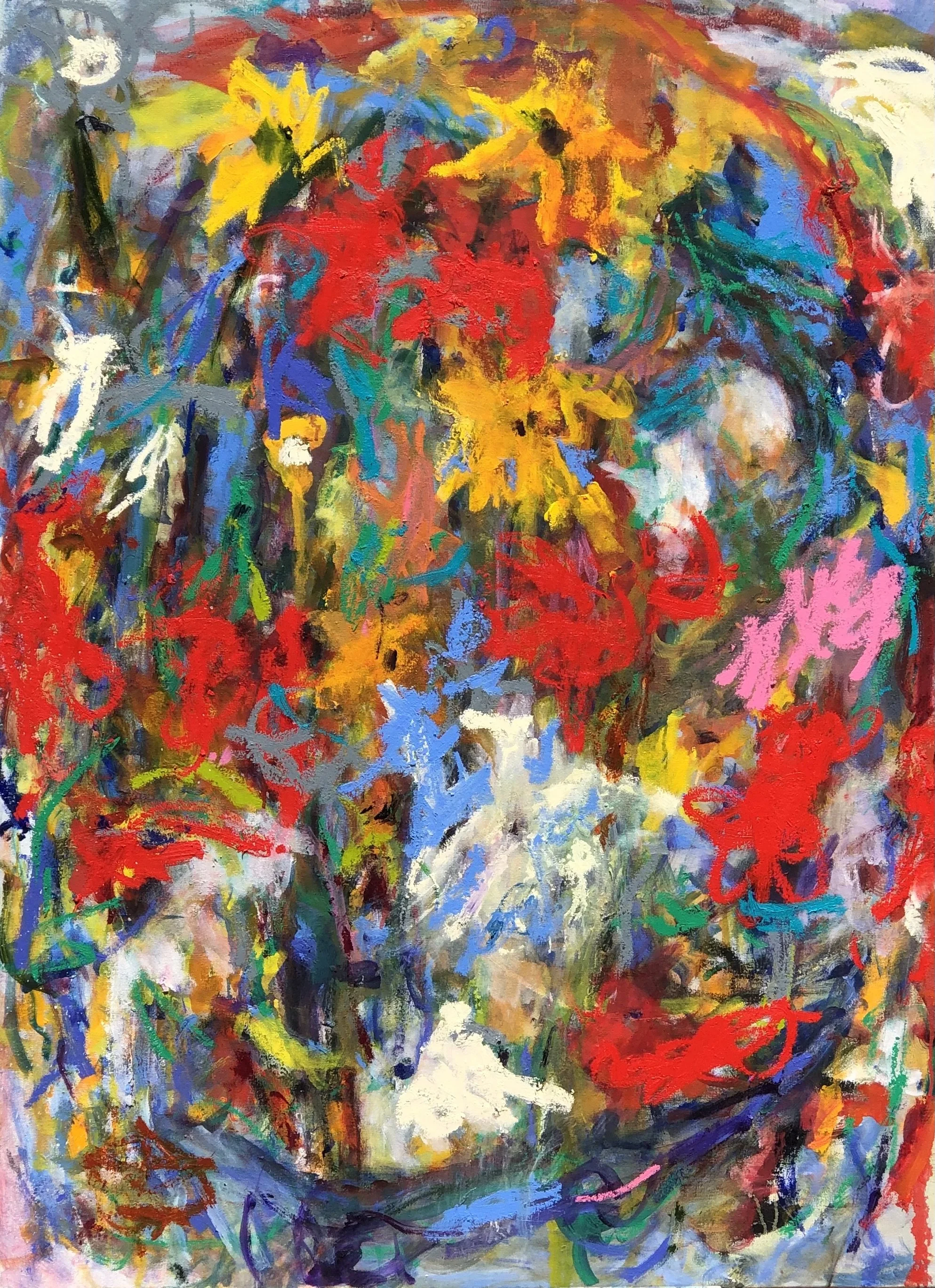
Oil on Canvas 36 × 48”
Original is in a private collection.
Board print images are printed on museum quality poster board and are suitable for framing
Photographic prints are high quality photographic prints mounted onto 1” thick foam core with edge banding
The shop page presents a detail from the painting. To see the entire image please return to the Florals Gallery page
The experience is deeply emotional. When I paint flowers, I lose myself in the moment, carried by movement and color rather than form. Flowers live such brief lives, especially once cut and placed in a vase. Perhaps, through paint, I am trying to slow time—to hold onto their intensity, their abundance, and their fleeting beauty just a little longer.
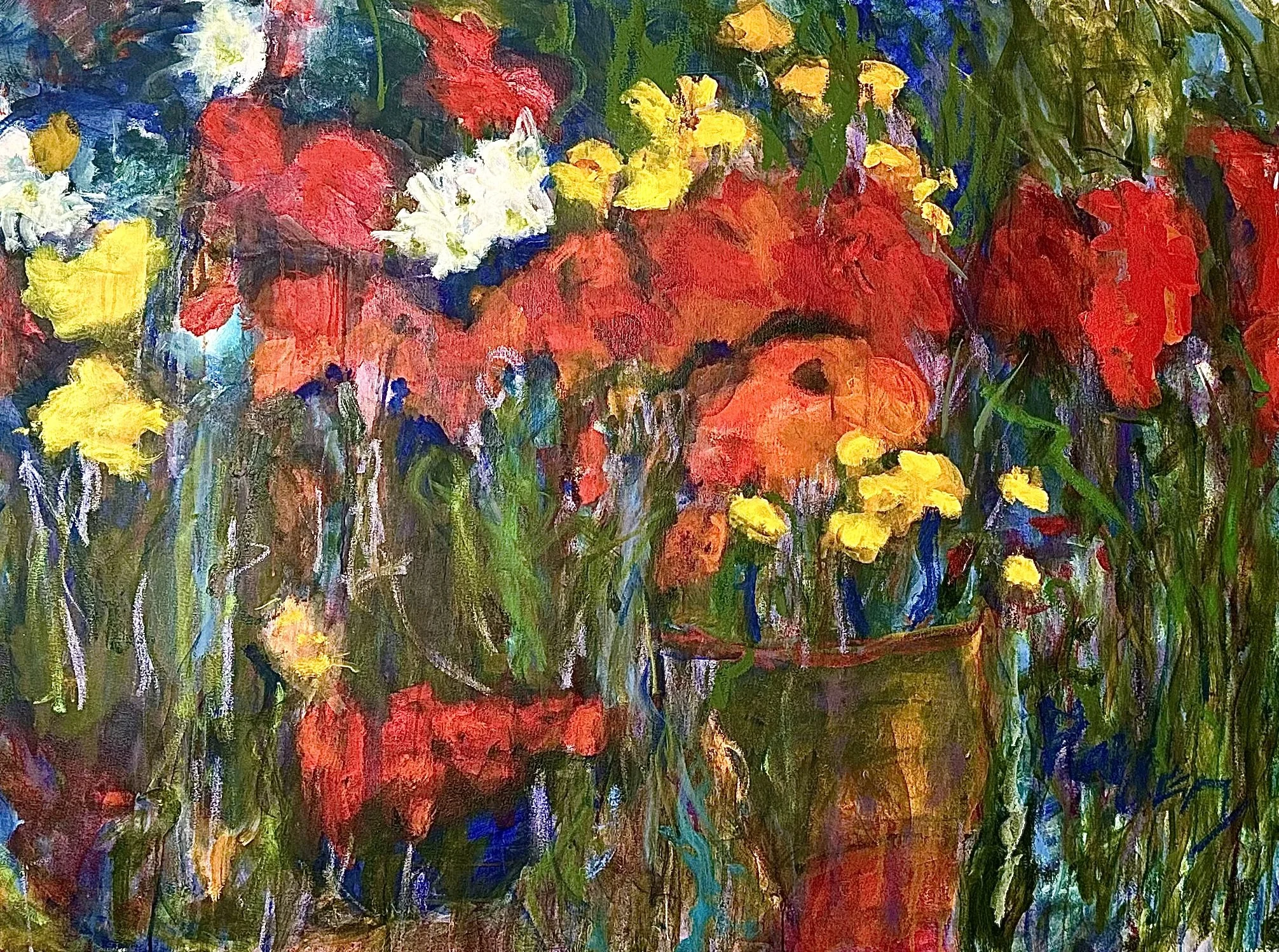
Oil on Canvas 36 × 48”
Original is available for purchase upon request.
Board print images are printed on museum quality poster board and are suitable for framing
Photographic prints are high quality photographic prints mounted onto 1” thick foam core with edge banding
The shop page presents a detail from the painting. To see the entire image please return to the Florals Gallery page
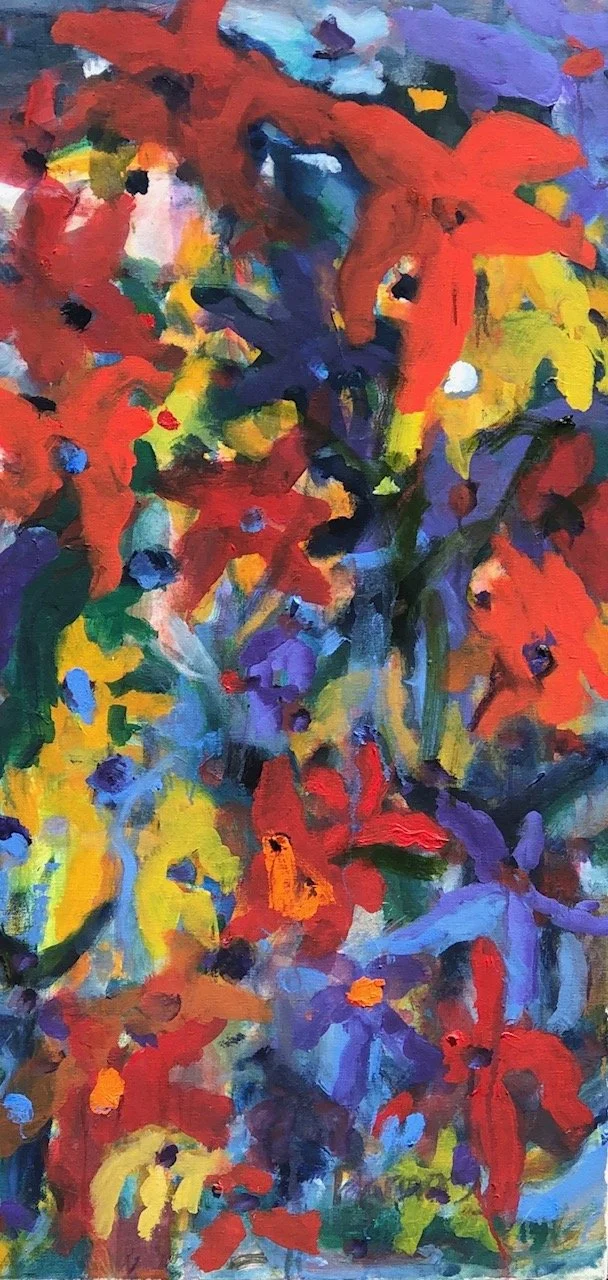
Oil on Canvas 24 × 48”
Original work is available upon request.
Board print images are printed on museum quality poster board and are suitable for framing
Photographic prints are high quality photographic prints mounted onto 1” thick foam core with edge banding
The shop page presents a detail from the painting. To see the entire image please return to the Florals gallery page
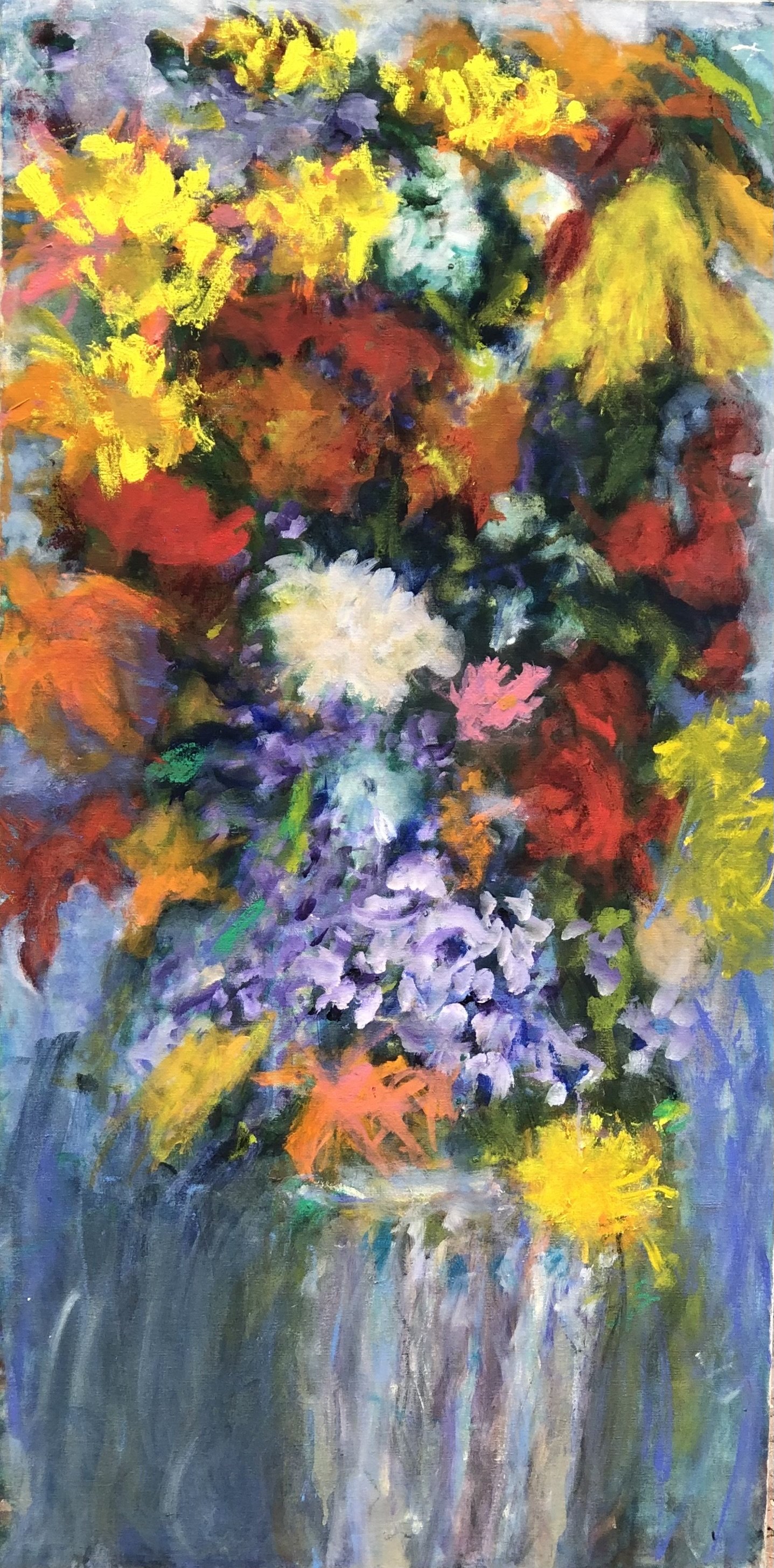
I love painting flowers. I love the way they explode across the canvas, refusing restraint. Color becomes the subject—overwhelming, immersive, and unapologetic. I’m drawn to flowers that envelop the entire surface, swelling, spiraling, and pressing outward as if they can’t be contained.
Oil on Canvas 24 × 36”
Original work is available upon request.
Board print images are printed on museum quality poster board and are suitable for framing
Photographic prints are high quality photographic prints mounted onto 1” thick foam core with edge banding
The shop page presents a detail from the painting. To see the entire image please return to the Florals gallery page
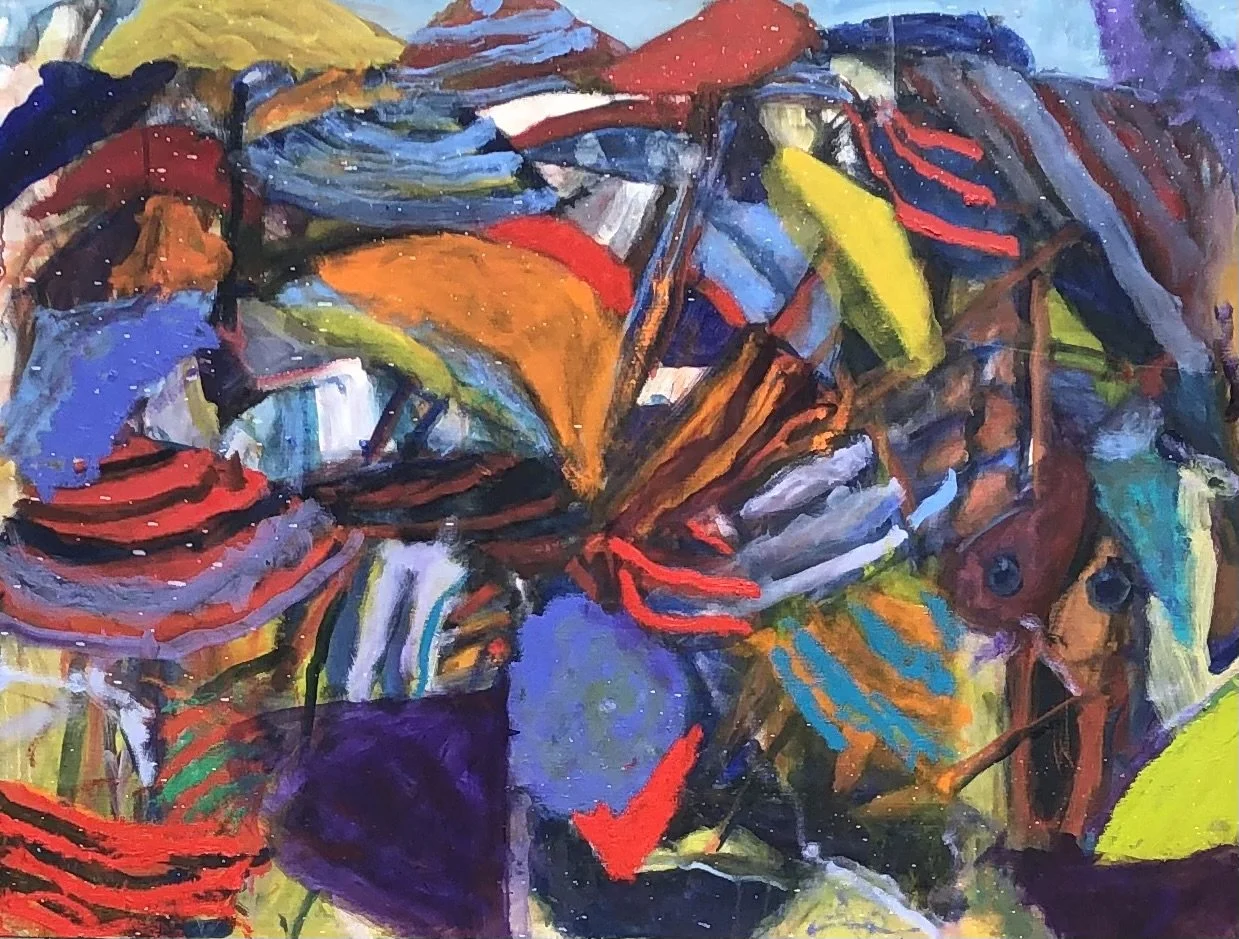
In every flower I paint, I hope to capture not only its vibrancy but also its fragility. I want viewers to feel both the energy of that bloom and the underlying knowledge that it won’t last. In that tension between the fleeting and the immortal, my brush finds its purpose.
Oil on Canvas 24 × 48”
Part of our Curated Collection and available at special pricing
Original work is available upon request.
Board print images are printed on museum quality poster board and are suitable for framing
Photographic prints are high quality photographic prints mounted onto 1” thick foam core with edge banding
The shop page presents a detail from the painting. To see the entire image please return to the Florals gallery page
Oil on Canvas 36 × 48”
Original is in a private collection.
Board print images are printed on museum quality poster board and are suitable for framing
Photographic prints are high quality photographic prints mounted onto 1” thick foam core with edge banding
The shop page presents a detail from the painting. To see the entire image please return to the Florals Gallery page
The experience is deeply emotional. When I paint flowers, I lose myself in the moment, carried by movement and color rather than form. Flowers live such brief lives, especially once cut and placed in a vase. Perhaps, through paint, I am trying to slow time—to hold onto their intensity, their abundance, and their fleeting beauty just a little longer.
Oil on Canvas 36 × 48”
Original is available for purchase upon request.
Board print images are printed on museum quality poster board and are suitable for framing
Photographic prints are high quality photographic prints mounted onto 1” thick foam core with edge banding
The shop page presents a detail from the painting. To see the entire image please return to the Florals Gallery page
Oil on Canvas 24 × 48”
Original work is available upon request.
Board print images are printed on museum quality poster board and are suitable for framing
Photographic prints are high quality photographic prints mounted onto 1” thick foam core with edge banding
The shop page presents a detail from the painting. To see the entire image please return to the Florals gallery page
I love painting flowers. I love the way they explode across the canvas, refusing restraint. Color becomes the subject—overwhelming, immersive, and unapologetic. I’m drawn to flowers that envelop the entire surface, swelling, spiraling, and pressing outward as if they can’t be contained.
Oil on Canvas 24 × 36”
Original work is available upon request.
Board print images are printed on museum quality poster board and are suitable for framing
Photographic prints are high quality photographic prints mounted onto 1” thick foam core with edge banding
The shop page presents a detail from the painting. To see the entire image please return to the Florals gallery page
In every flower I paint, I hope to capture not only its vibrancy but also its fragility. I want viewers to feel both the energy of that bloom and the underlying knowledge that it won’t last. In that tension between the fleeting and the immortal, my brush finds its purpose.
Oil on Canvas 24 × 48”
Part of our Curated Collection and available at special pricing
Original work is available upon request.
Board print images are printed on museum quality poster board and are suitable for framing
Photographic prints are high quality photographic prints mounted onto 1” thick foam core with edge banding
The shop page presents a detail from the painting. To see the entire image please return to the Florals gallery page
Oil on Canvas 36 × 48”
Original is in a private collection.
Board print images are printed on museum quality poster board and are suitable for framing
Photographic prints are high quality photographic prints mounted onto 1” thick foam core with edge banding
The shop page presents a detail from the painting. To see the entire image please return to the Florals Gallery page
The experience is deeply emotional. When I paint flowers, I lose myself in the moment, carried by movement and color rather than form. Flowers live such brief lives, especially once cut and placed in a vase. Perhaps, through paint, I am trying to slow time—to hold onto their intensity, their abundance, and their fleeting beauty just a little longer.
Oil on Canvas 36 × 48”
Original is available for purchase upon request.
Board print images are printed on museum quality poster board and are suitable for framing
Photographic prints are high quality photographic prints mounted onto 1” thick foam core with edge banding
The shop page presents a detail from the painting. To see the entire image please return to the Florals Gallery page
Oil on Canvas 24 × 48”
Original work is available upon request.
Board print images are printed on museum quality poster board and are suitable for framing
Photographic prints are high quality photographic prints mounted onto 1” thick foam core with edge banding
The shop page presents a detail from the painting. To see the entire image please return to the Florals gallery page
I love painting flowers. I love the way they explode across the canvas, refusing restraint. Color becomes the subject—overwhelming, immersive, and unapologetic. I’m drawn to flowers that envelop the entire surface, swelling, spiraling, and pressing outward as if they can’t be contained.
Oil on Canvas 24 × 36”
Original work is available upon request.
Board print images are printed on museum quality poster board and are suitable for framing
Photographic prints are high quality photographic prints mounted onto 1” thick foam core with edge banding
The shop page presents a detail from the painting. To see the entire image please return to the Florals gallery page
In every flower I paint, I hope to capture not only its vibrancy but also its fragility. I want viewers to feel both the energy of that bloom and the underlying knowledge that it won’t last. In that tension between the fleeting and the immortal, my brush finds its purpose.
Oil on Canvas 24 × 48”
Part of our Curated Collection and available at special pricing
Original work is available upon request.
Board print images are printed on museum quality poster board and are suitable for framing
Photographic prints are high quality photographic prints mounted onto 1” thick foam core with edge banding
The shop page presents a detail from the painting. To see the entire image please return to the Florals gallery page
Oil on Canvas 36 × 48”
Original is in a private collection.
Board print images are printed on museum quality poster board and are suitable for framing
Photographic prints are high quality photographic prints mounted onto 1” thick foam core with edge banding
The shop page presents a detail from the painting. To see the entire image please return to the Florals Gallery page
The experience is deeply emotional. When I paint flowers, I lose myself in the moment, carried by movement and color rather than form. Flowers live such brief lives, especially once cut and placed in a vase. Perhaps, through paint, I am trying to slow time—to hold onto their intensity, their abundance, and their fleeting beauty just a little longer.
Oil on Canvas 36 × 48”
Original is available for purchase upon request.
Board print images are printed on museum quality poster board and are suitable for framing
Photographic prints are high quality photographic prints mounted onto 1” thick foam core with edge banding
The shop page presents a detail from the painting. To see the entire image please return to the Florals Gallery page
Oil on Canvas 24 × 48”
Original work is available upon request.
Board print images are printed on museum quality poster board and are suitable for framing
Photographic prints are high quality photographic prints mounted onto 1” thick foam core with edge banding
The shop page presents a detail from the painting. To see the entire image please return to the Florals gallery page
I love painting flowers. I love the way they explode across the canvas, refusing restraint. Color becomes the subject—overwhelming, immersive, and unapologetic. I’m drawn to flowers that envelop the entire surface, swelling, spiraling, and pressing outward as if they can’t be contained.
Oil on Canvas 24 × 36”
Original work is available upon request.
Board print images are printed on museum quality poster board and are suitable for framing
Photographic prints are high quality photographic prints mounted onto 1” thick foam core with edge banding
The shop page presents a detail from the painting. To see the entire image please return to the Florals gallery page
In every flower I paint, I hope to capture not only its vibrancy but also its fragility. I want viewers to feel both the energy of that bloom and the underlying knowledge that it won’t last. In that tension between the fleeting and the immortal, my brush finds its purpose.
Oil on Canvas 24 × 48”
Part of our Curated Collection and available at special pricing
Original work is available upon request.
Board print images are printed on museum quality poster board and are suitable for framing
Photographic prints are high quality photographic prints mounted onto 1” thick foam core with edge banding
The shop page presents a detail from the painting. To see the entire image please return to the Florals gallery page
Oil on Canvas 36 × 48”
Original is in a private collection.
Board print images are printed on museum quality poster board and are suitable for framing
Photographic prints are high quality photographic prints mounted onto 1” thick foam core with edge banding
The shop page presents a detail from the painting. To see the entire image please return to the Florals Gallery page
The experience is deeply emotional. When I paint flowers, I lose myself in the moment, carried by movement and color rather than form. Flowers live such brief lives, especially once cut and placed in a vase. Perhaps, through paint, I am trying to slow time—to hold onto their intensity, their abundance, and their fleeting beauty just a little longer.
Oil on Canvas 36 × 48”
Original is available for purchase upon request.
Board print images are printed on museum quality poster board and are suitable for framing
Photographic prints are high quality photographic prints mounted onto 1” thick foam core with edge banding
The shop page presents a detail from the painting. To see the entire image please return to the Florals Gallery page
Oil on Canvas 24 × 48”
Original work is available upon request.
Board print images are printed on museum quality poster board and are suitable for framing
Photographic prints are high quality photographic prints mounted onto 1” thick foam core with edge banding
The shop page presents a detail from the painting. To see the entire image please return to the Florals gallery page
I love painting flowers. I love the way they explode across the canvas, refusing restraint. Color becomes the subject—overwhelming, immersive, and unapologetic. I’m drawn to flowers that envelop the entire surface, swelling, spiraling, and pressing outward as if they can’t be contained.
Oil on Canvas 24 × 36”
Original work is available upon request.
Board print images are printed on museum quality poster board and are suitable for framing
Photographic prints are high quality photographic prints mounted onto 1” thick foam core with edge banding
The shop page presents a detail from the painting. To see the entire image please return to the Florals gallery page
In every flower I paint, I hope to capture not only its vibrancy but also its fragility. I want viewers to feel both the energy of that bloom and the underlying knowledge that it won’t last. In that tension between the fleeting and the immortal, my brush finds its purpose.
Oil on Canvas 24 × 48”
Part of our Curated Collection and available at special pricing
Original work is available upon request.
Board print images are printed on museum quality poster board and are suitable for framing
Photographic prints are high quality photographic prints mounted onto 1” thick foam core with edge banding
The shop page presents a detail from the painting. To see the entire image please return to the Florals gallery page
Oil on Canvas 36 × 48”
Original is in a private collection.
Board print images are printed on museum quality poster board and are suitable for framing
Photographic prints are high quality photographic prints mounted onto 1” thick foam core with edge banding
The shop page presents a detail from the painting. To see the entire image please return to the Florals Gallery page
The experience is deeply emotional. When I paint flowers, I lose myself in the moment, carried by movement and color rather than form. Flowers live such brief lives, especially once cut and placed in a vase. Perhaps, through paint, I am trying to slow time—to hold onto their intensity, their abundance, and their fleeting beauty just a little longer.
Oil on Canvas 36 × 48”
Original is available for purchase upon request.
Board print images are printed on museum quality poster board and are suitable for framing
Photographic prints are high quality photographic prints mounted onto 1” thick foam core with edge banding
The shop page presents a detail from the painting. To see the entire image please return to the Florals Gallery page
Oil on Canvas 24 × 48”
Original work is available upon request.
Board print images are printed on museum quality poster board and are suitable for framing
Photographic prints are high quality photographic prints mounted onto 1” thick foam core with edge banding
The shop page presents a detail from the painting. To see the entire image please return to the Florals gallery page
I love painting flowers. I love the way they explode across the canvas, refusing restraint. Color becomes the subject—overwhelming, immersive, and unapologetic. I’m drawn to flowers that envelop the entire surface, swelling, spiraling, and pressing outward as if they can’t be contained.
Oil on Canvas 24 × 36”
Original work is available upon request.
Board print images are printed on museum quality poster board and are suitable for framing
Photographic prints are high quality photographic prints mounted onto 1” thick foam core with edge banding
The shop page presents a detail from the painting. To see the entire image please return to the Florals gallery page
In every flower I paint, I hope to capture not only its vibrancy but also its fragility. I want viewers to feel both the energy of that bloom and the underlying knowledge that it won’t last. In that tension between the fleeting and the immortal, my brush finds its purpose.
Oil on Canvas 24 × 48”
Part of our Curated Collection and available at special pricing
Original work is available upon request.
Board print images are printed on museum quality poster board and are suitable for framing
Photographic prints are high quality photographic prints mounted onto 1” thick foam core with edge banding
The shop page presents a detail from the painting. To see the entire image please return to the Florals gallery page
Oil on Canvas 36 × 48”
Original is in a private collection.
Board print images are printed on museum quality poster board and are suitable for framing
Photographic prints are high quality photographic prints mounted onto 1” thick foam core with edge banding
The shop page presents a detail from the painting. To see the entire image please return to the Florals Gallery page
The experience is deeply emotional. When I paint flowers, I lose myself in the moment, carried by movement and color rather than form. Flowers live such brief lives, especially once cut and placed in a vase. Perhaps, through paint, I am trying to slow time—to hold onto their intensity, their abundance, and their fleeting beauty just a little longer.
Oil on Canvas 36 × 48”
Original is available for purchase upon request.
Board print images are printed on museum quality poster board and are suitable for framing
Photographic prints are high quality photographic prints mounted onto 1” thick foam core with edge banding
The shop page presents a detail from the painting. To see the entire image please return to the Florals Gallery page
Oil on Canvas 24 × 48”
Original work is available upon request.
Board print images are printed on museum quality poster board and are suitable for framing
Photographic prints are high quality photographic prints mounted onto 1” thick foam core with edge banding
The shop page presents a detail from the painting. To see the entire image please return to the Florals gallery page
I love painting flowers. I love the way they explode across the canvas, refusing restraint. Color becomes the subject—overwhelming, immersive, and unapologetic. I’m drawn to flowers that envelop the entire surface, swelling, spiraling, and pressing outward as if they can’t be contained.
Oil on Canvas 24 × 36”
Original work is available upon request.
Board print images are printed on museum quality poster board and are suitable for framing
Photographic prints are high quality photographic prints mounted onto 1” thick foam core with edge banding
The shop page presents a detail from the painting. To see the entire image please return to the Florals gallery page
In every flower I paint, I hope to capture not only its vibrancy but also its fragility. I want viewers to feel both the energy of that bloom and the underlying knowledge that it won’t last. In that tension between the fleeting and the immortal, my brush finds its purpose.
Oil on Canvas 24 × 48”
Part of our Curated Collection and available at special pricing
Original work is available upon request.
Board print images are printed on museum quality poster board and are suitable for framing
Photographic prints are high quality photographic prints mounted onto 1” thick foam core with edge banding
The shop page presents a detail from the painting. To see the entire image please return to the Florals gallery page
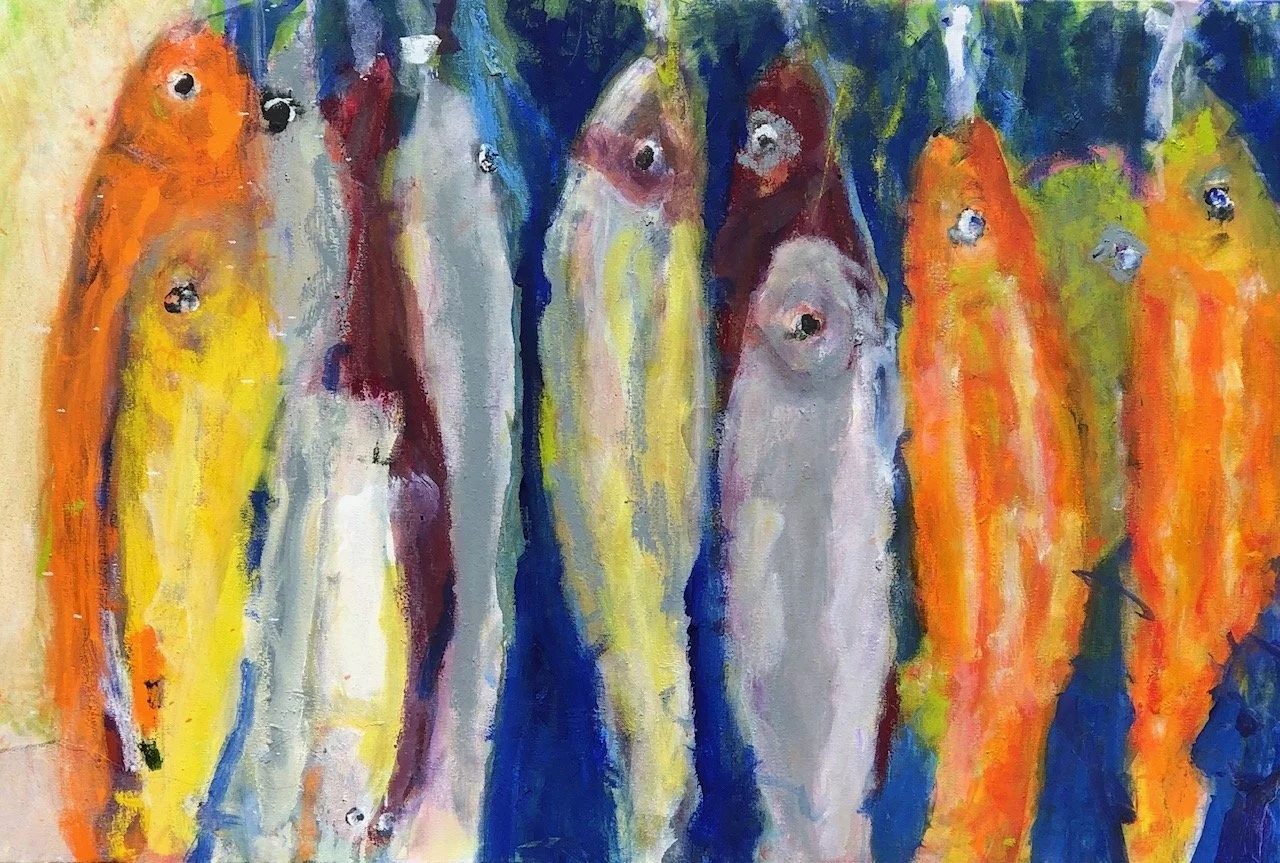
Oil on Hardboard - 18 × 24”
Part of our Curated Collection and available at special pricing
Original is oil on hardboard is available upon request. Reproductions are printed on premium photographic paper.
The shop page presents a detail from the painting. To see the entire image please return to the Beaches and Fishes Gallery page
The beach exists in memory as much as it does in place. It appears as light on sand, wind moving through the dunes, and extended hours spent near the water along the New Jersey coast. These works are rooted in proximity rather than immersion—observations made from shore, shaped by distance, rhythm, and time.
The paintings emerge from recollection rather than direct transcription. They are informed by repetition, stillness, and the steady presence of the sea at the edge of vision. Memory distills the experience, allowing sensation and atmosphere to replace detail, and leaving behind a quiet sense of duration.
Oil on Canvas 24 × 48”
Original is available for purchase upon request.
Board print images are printed on museum quality poster board and are suitable for framing
Photographic prints are high quality photographic prints mounted onto 1” thick foam core with edge banding
The shop page presents a detail from the painting. To see the entire image please return to the Fishes and Beaches gallery page
The fish belong to a parallel, imagined space—suggested rather than observed. Seen from above the surface, they represent what lies beyond reach and beneath awareness. Their forms drift through painted space with a sense of age and continuity, shaped more by intuition than by description.
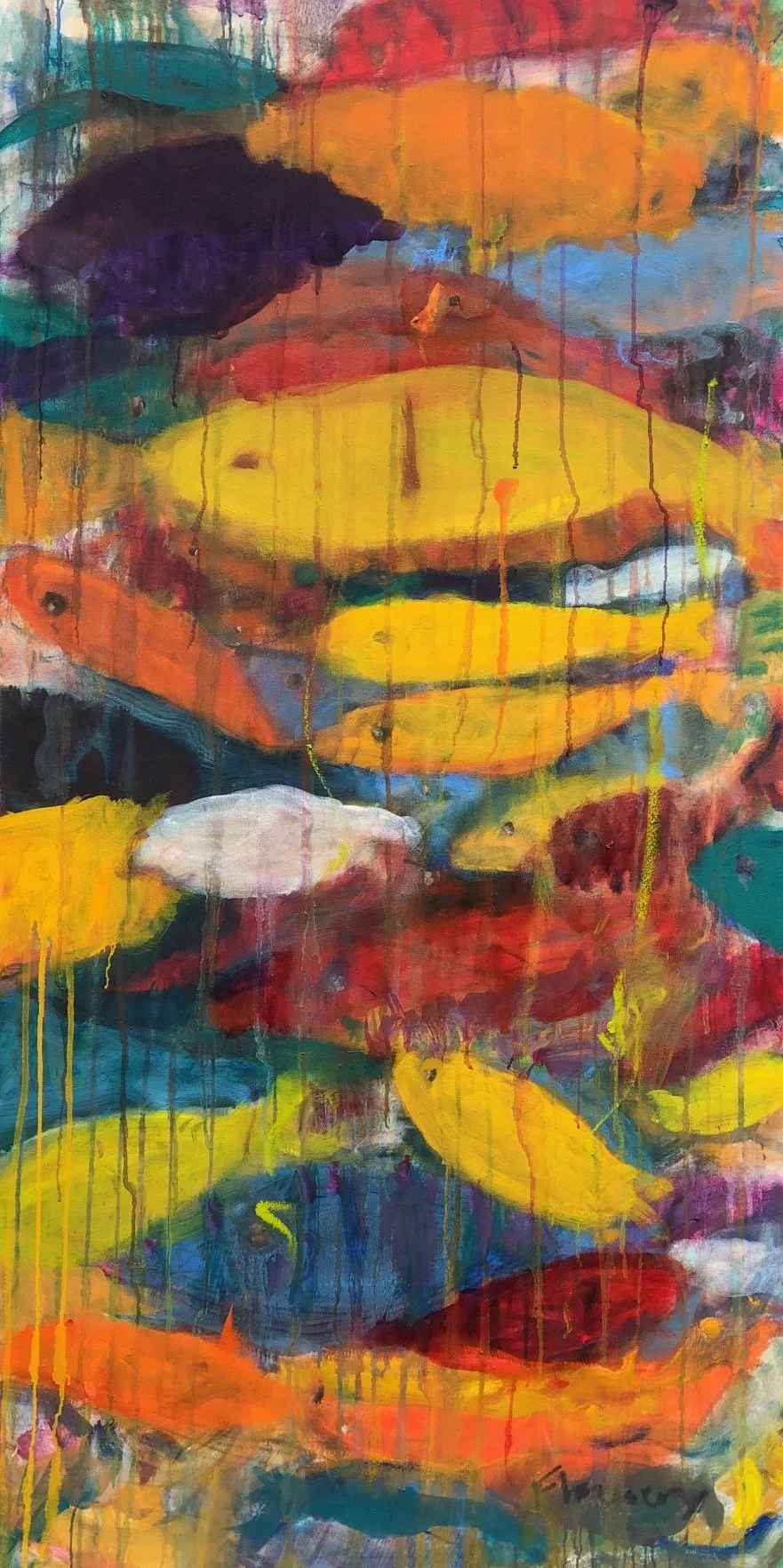
Oil on Canvas 24 × 48”
Original is available for purchase upon request.
Board print images are printed on museum quality poster board and are suitable for framing
Photographic prints are high quality photographic prints mounted onto 1” thick foam core with edge banding
The shop page presents a detail from the painting. To see the entire image please return to the Fishes and Beaches Gallery page
Standing at the water’s edge has always carried a sense of return. There is calm in watching rather than entering, in remaining grounded while movement unfolds just beyond. The sea becomes a boundary and a presence—something encountered through reflection rather than immersion.
Together, the beach and fish paintings explore the relationship between observation and imagination, surface and depth. They occupy a space between the tangible and the inferred, inviting viewers to linger at the shoreline—where perception slows, memory gathers, and meaning quietly unfolds.
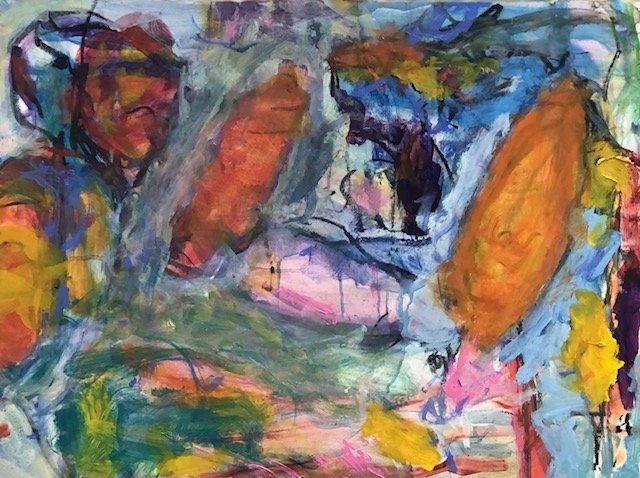
Oil on Canvas 30 × 40”
Original work is in a private collection.
Board print images are printed on museum quality poster board and are suitable for framing
Photographic prints are high quality photographic prints mounted onto 1” thick foam core with edge banding
The shop page presents a detail from the painting. To see the entire image please return to the Florals Gallery page
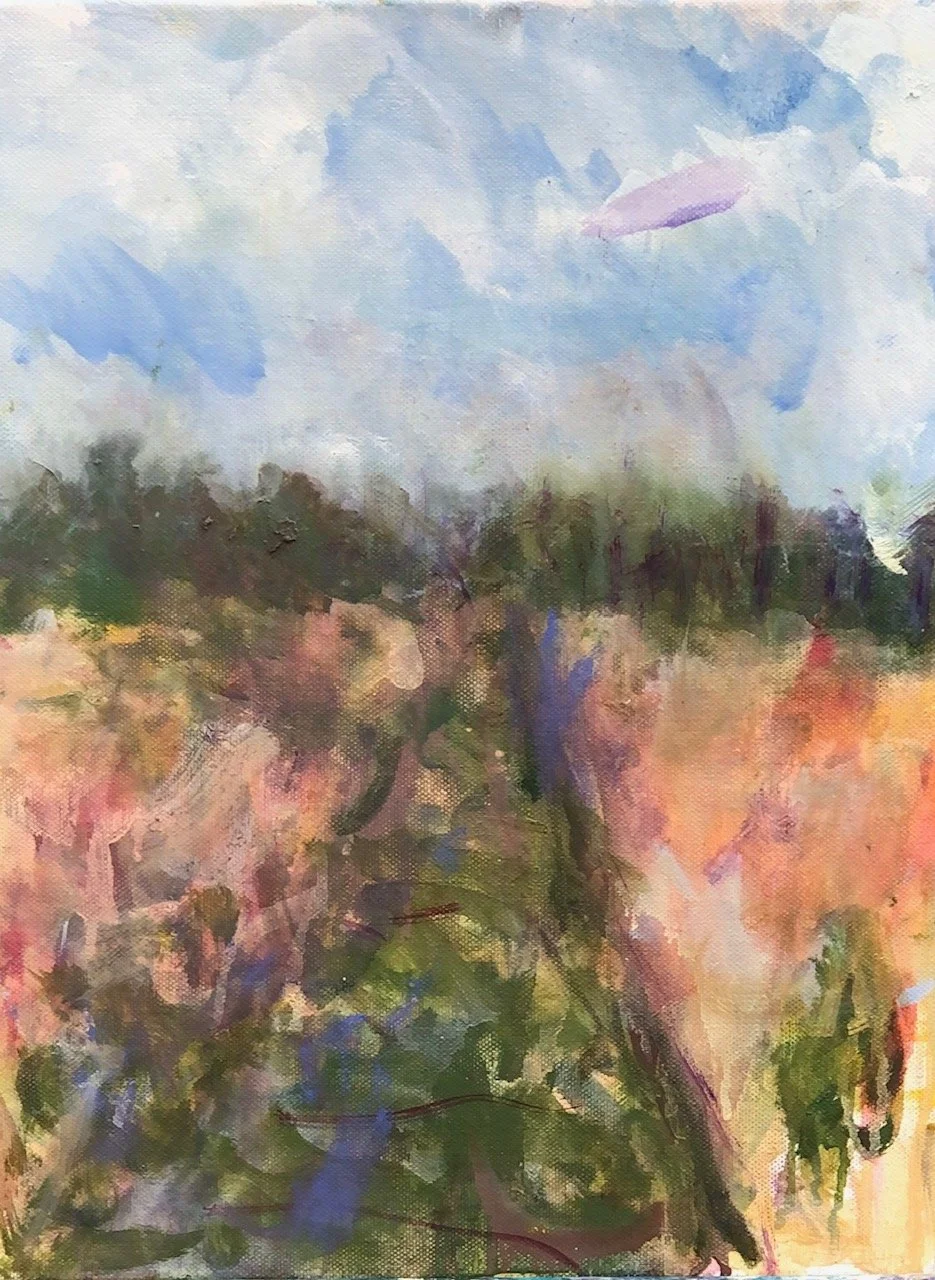
Oil on Canvas 14 × 18”
Original work is in a private collection.
Part of our Curated Series and available at reduced pricing
Board print images are printed on museum quality poster board and are suitable for framing
Photographic prints are high quality photographic prints mounted onto 1” thick foam core with edge banding
The shop page presents a detail from the painting. To see the entire image please return to the Landscapes gallery page
Valley Forge is most often remembered for its hardship—its cabins, its long winter. For me, it exists first as a place of quiet beauty. In autumn, the land softens, and the valley dissolves into layers of color and light.
Rolling hills and open fields unfold slowly, shaped by shifting skies and changing foliage. This is the Valley Forge I return to again and again, especially in the fall, when the landscape feels most alive.
Third Block
I travel the Outer Line Drive that circles the park, watching the trees and sky change their moods. No two visits are ever the same; each offers a different impression, a different rhythm.
Fourth Block
Working from photographs taken during this brief season, I surround myself in the studio with fragments of trees, fields, and distant horizons. Time slows, and thought drifts.
Closing Block
These landscapes are not about recounting history. They are about entering a place where memory, light, and land meet—where beauty lingers, waiting to be seen.
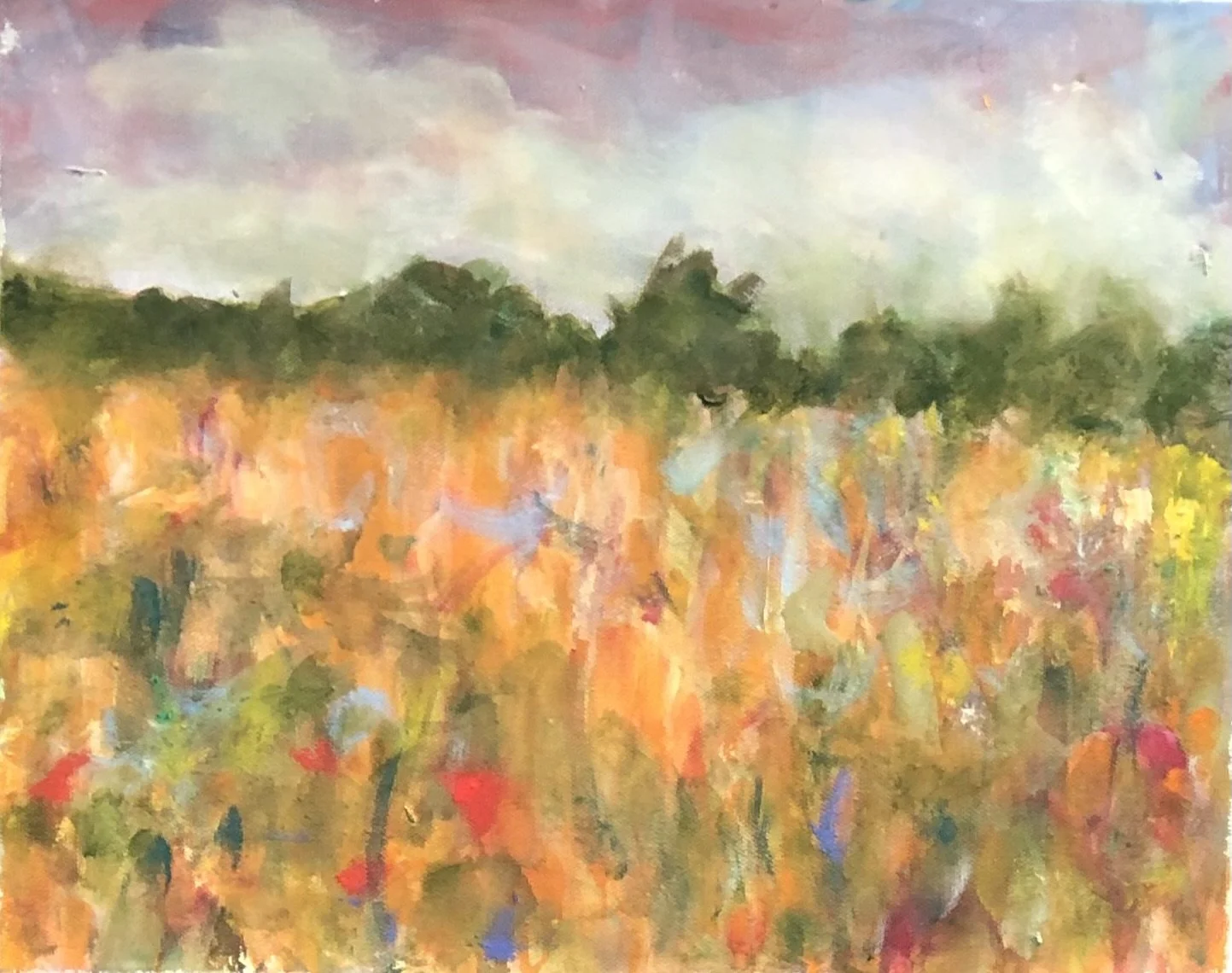
Oil on Canvas 18 × 24”
Original work is available upon request.
Part of our Curated Collection and available at special pricing
Board print images are printed on museum quality poster board and are suitable for framing
Photographic prints are high quality photographic prints mounted onto 1” thick foam core with edge banding
The shop page presents a detail from the painting. To see the entire image please return to the Landscapes gallery page
Dorothy reminds us in The Wizard of Oz that what we search for may already exist close to home. These works grow out of the landscape just beyond my door in Penllyn, where mature trees shape the rhythm of the seasons and quietly influence how I see.
In autumn, they flare into gold and scarlet, transforming the familiar into something luminous. Winter brings a pause — a moment of stillness filled with anticipation — before spring arrives and color returns again. This cycle of change and renewal continues to guide my work, reminding me that inspiration often lives in the places we know best, waiting to be seen with fresh eyes.
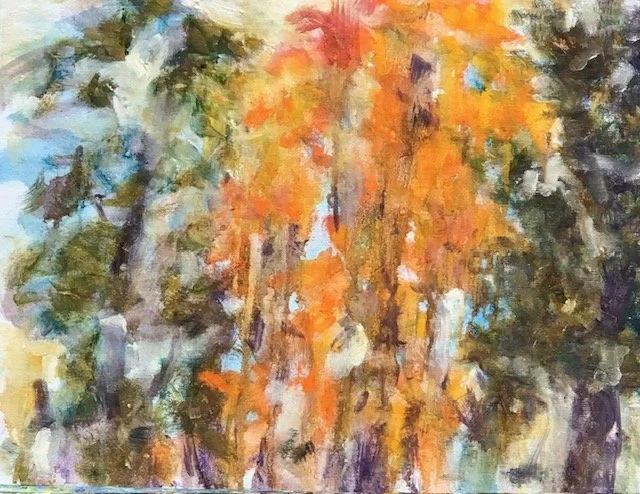
Oil on Canvas 16 × 20”
Original work is available upon request.
Board print images are printed on museum quality poster board and are suitable for framing
Photographic prints are high quality photographic prints mounted onto 1” thick foam core with edge banding
The shop page presents a detail from the painting. To see the entire image please return to the Cityscapes gallery page
Oil on Canvas 14 × 18”
Original work is in a private collection.
Part of our Curated Series and available at reduced pricing
Board print images are printed on museum quality poster board and are suitable for framing
Photographic prints are high quality photographic prints mounted onto 1” thick foam core with edge banding
The shop page presents a detail from the painting. To see the entire image please return to the Landscapes gallery page
Valley Forge is most often remembered for its hardship—its cabins, its long winter. For me, it exists first as a place of quiet beauty. In autumn, the land softens, and the valley dissolves into layers of color and light.
Rolling hills and open fields unfold slowly, shaped by shifting skies and changing foliage. This is the Valley Forge I return to again and again, especially in the fall, when the landscape feels most alive.
Third Block
I travel the Outer Line Drive that circles the park, watching the trees and sky change their moods. No two visits are ever the same; each offers a different impression, a different rhythm.
Fourth Block
Working from photographs taken during this brief season, I surround myself in the studio with fragments of trees, fields, and distant horizons. Time slows, and thought drifts.
Closing Block
These landscapes are not about recounting history. They are about entering a place where memory, light, and land meet—where beauty lingers, waiting to be seen.
Oil on Canvas 18 × 24”
Original work is available upon request.
Part of our Curated Collection and available at special pricing
Board print images are printed on museum quality poster board and are suitable for framing
Photographic prints are high quality photographic prints mounted onto 1” thick foam core with edge banding
The shop page presents a detail from the painting. To see the entire image please return to the Landscapes gallery page
Dorothy reminds us in The Wizard of Oz that what we search for may already exist close to home. These works grow out of the landscape just beyond my door in Penllyn, where mature trees shape the rhythm of the seasons and quietly influence how I see.
In autumn, they flare into gold and scarlet, transforming the familiar into something luminous. Winter brings a pause — a moment of stillness filled with anticipation — before spring arrives and color returns again. This cycle of change and renewal continues to guide my work, reminding me that inspiration often lives in the places we know best, waiting to be seen with fresh eyes.
Oil on Canvas 16 × 20”
Original work is available upon request.
Board print images are printed on museum quality poster board and are suitable for framing
Photographic prints are high quality photographic prints mounted onto 1” thick foam core with edge banding
The shop page presents a detail from the painting. To see the entire image please return to the Cityscapes gallery page
Oil on Canvas 14 × 18”
Original work is in a private collection.
Part of our Curated Series and available at reduced pricing
Board print images are printed on museum quality poster board and are suitable for framing
Photographic prints are high quality photographic prints mounted onto 1” thick foam core with edge banding
The shop page presents a detail from the painting. To see the entire image please return to the Landscapes gallery page
Valley Forge is most often remembered for its hardship—its cabins, its long winter. For me, it exists first as a place of quiet beauty. In autumn, the land softens, and the valley dissolves into layers of color and light.
Rolling hills and open fields unfold slowly, shaped by shifting skies and changing foliage. This is the Valley Forge I return to again and again, especially in the fall, when the landscape feels most alive.
Third Block
I travel the Outer Line Drive that circles the park, watching the trees and sky change their moods. No two visits are ever the same; each offers a different impression, a different rhythm.
Fourth Block
Working from photographs taken during this brief season, I surround myself in the studio with fragments of trees, fields, and distant horizons. Time slows, and thought drifts.
Closing Block
These landscapes are not about recounting history. They are about entering a place where memory, light, and land meet—where beauty lingers, waiting to be seen.
Oil on Canvas 18 × 24”
Original work is available upon request.
Part of our Curated Collection and available at special pricing
Board print images are printed on museum quality poster board and are suitable for framing
Photographic prints are high quality photographic prints mounted onto 1” thick foam core with edge banding
The shop page presents a detail from the painting. To see the entire image please return to the Landscapes gallery page
Dorothy reminds us in The Wizard of Oz that what we search for may already exist close to home. These works grow out of the landscape just beyond my door in Penllyn, where mature trees shape the rhythm of the seasons and quietly influence how I see.
In autumn, they flare into gold and scarlet, transforming the familiar into something luminous. Winter brings a pause — a moment of stillness filled with anticipation — before spring arrives and color returns again. This cycle of change and renewal continues to guide my work, reminding me that inspiration often lives in the places we know best, waiting to be seen with fresh eyes.
Oil on Canvas 16 × 20”
Original work is available upon request.
Board print images are printed on museum quality poster board and are suitable for framing
Photographic prints are high quality photographic prints mounted onto 1” thick foam core with edge banding
The shop page presents a detail from the painting. To see the entire image please return to the Cityscapes gallery page
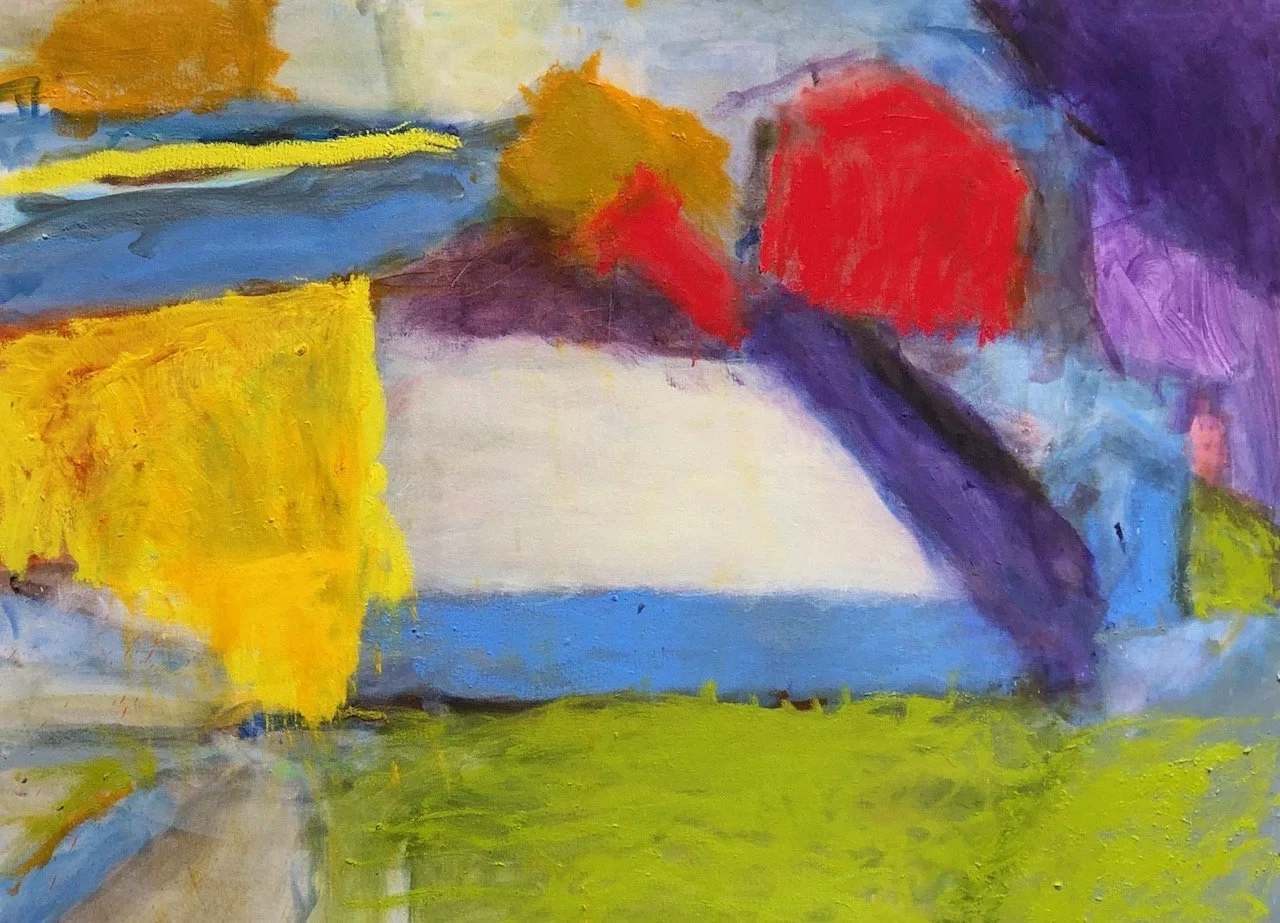
Oil on Canvas 30 × 40”
Original work is available upon request.
Board print images are printed on museum quality poster board and are suitable for framing
Photographic prints are high quality photographic prints mounted onto 1” thick foam core with edge banding
The shop page presents a detail from the painting. To see the entire image please return to the Abstracts gallery page
Space and Time
Abstract painting exists in space and time rather than place. It is shaped by memory, emotion, and the fleeting images that surface between waking and sleep. These are moments that resist clarity—felt more than seen, remembered more than understood—where the mind drifts freely and meaning remains open.
Beneath the Surface
For the painter, abstraction is both a home and an unknown terrain. It offers freedom from description and invites instinct to lead. I have been drawn to abstract painting since my earliest experiments, returning to it again and again as an outlet for a wandering mind.
Even when my work moves into other subjects, abstraction remains present—quietly shaping form, color, and movement. It influences how I see the world and how I translate it onto the canvas. In this way, abstraction is not separate from the rest of my work, but woven through it, guiding each painting from beneath the surface.
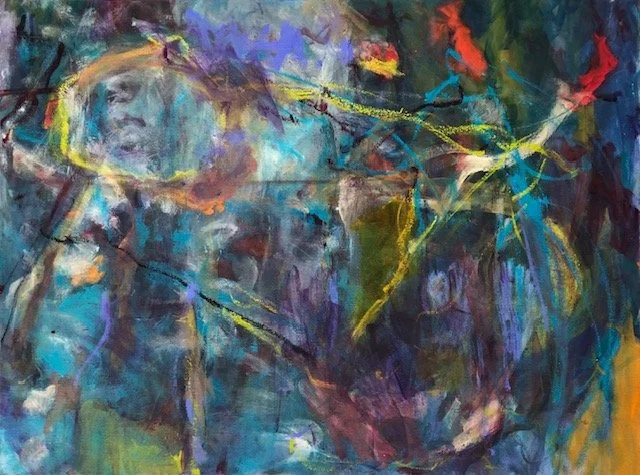
Oil on Canvas 30 × 40”
Original work is available upon request.
Board print images are printed on museum quality poster board and are suitable for framing
Photographic prints are high quality photographic prints mounted onto 1” thick foam core with edge banding
The shop page presents a detail from the painting. To see the entire image please return to the Abstracts gallery page
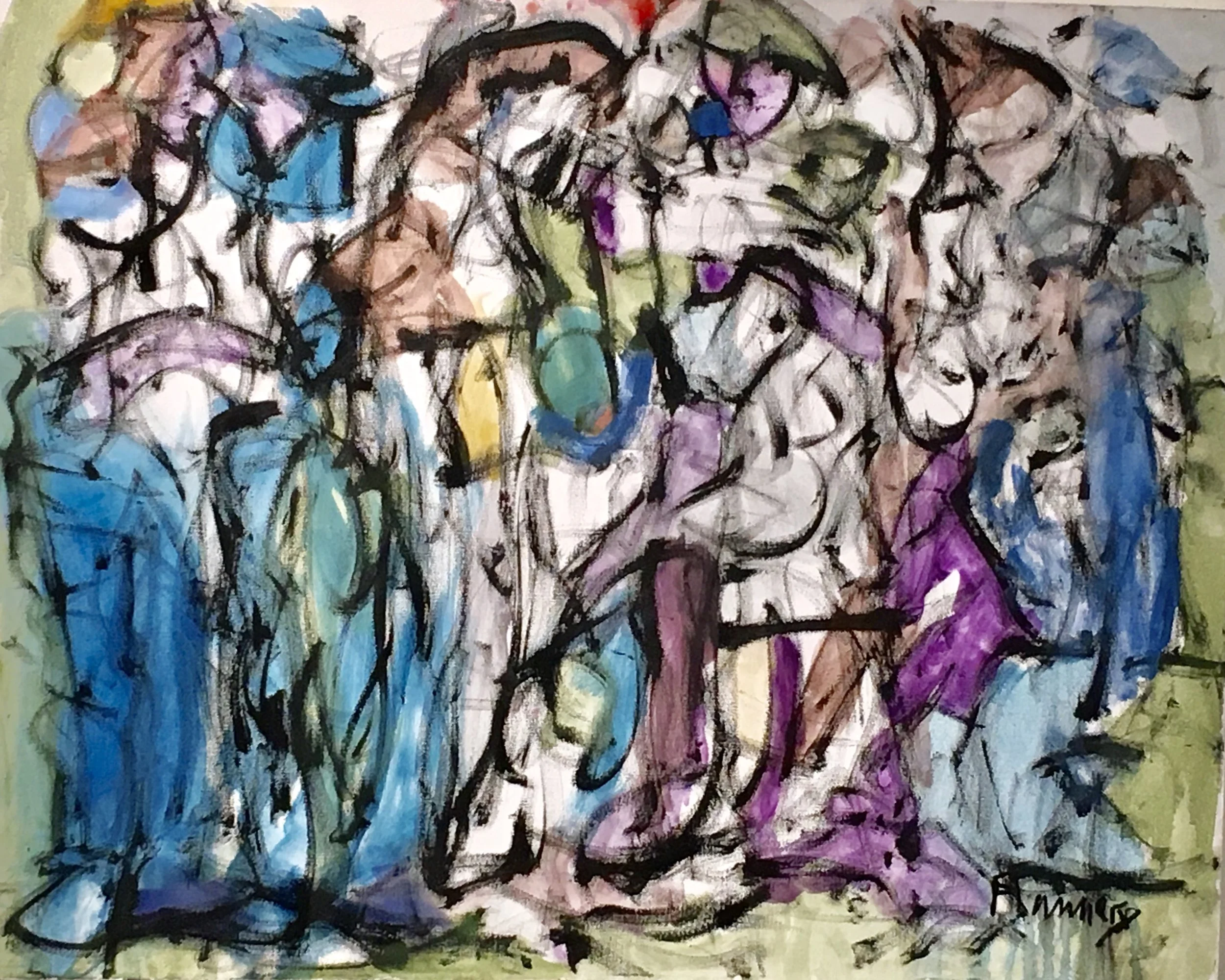
Oil on Canvas - 24 × 36”
Original is available upon request.
Board print images are printed on museum quality poster board and are suitable for framing
Photographic prints are high quality photographic prints mounted onto 1” thick foam core with edge banding
The shop page presents a detail from the painting. To see the entire image please return to the Abstracts Gallery page
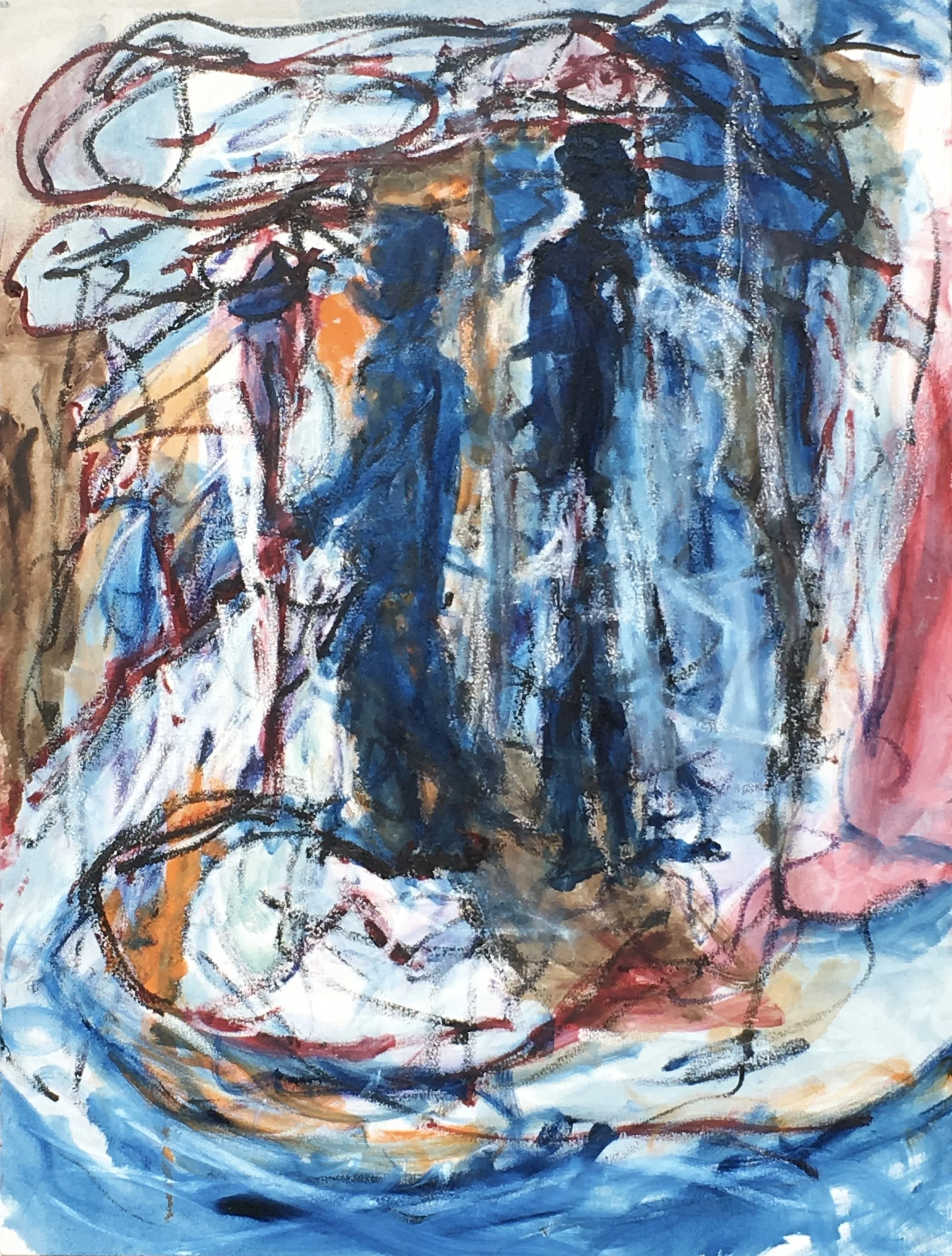
Oil on Canvas - 20 × 30”
Original is available upon request.
Board print images are printed on museum quality poster board and are suitable for framing
Photographic prints are high quality photographic prints mounted onto 1” thick foam core with edge banding
The shop page presents a detail from the painting. To see the entire image please return to the Abstracts Gallery page
Oil on Canvas 30 × 40”
Original work is available upon request.
Board print images are printed on museum quality poster board and are suitable for framing
Photographic prints are high quality photographic prints mounted onto 1” thick foam core with edge banding
The shop page presents a detail from the painting. To see the entire image please return to the Abstracts gallery page
Space and Time
Abstract painting exists in space and time rather than place. It is shaped by memory, emotion, and the fleeting images that surface between waking and sleep. These are moments that resist clarity—felt more than seen, remembered more than understood—where the mind drifts freely and meaning remains open.
Beneath the Surface
For the painter, abstraction is both a home and an unknown terrain. It offers freedom from description and invites instinct to lead. I have been drawn to abstract painting since my earliest experiments, returning to it again and again as an outlet for a wandering mind.
Even when my work moves into other subjects, abstraction remains present—quietly shaping form, color, and movement. It influences how I see the world and how I translate it onto the canvas. In this way, abstraction is not separate from the rest of my work, but woven through it, guiding each painting from beneath the surface.
Oil on Canvas 30 × 40”
Original work is available upon request.
Board print images are printed on museum quality poster board and are suitable for framing
Photographic prints are high quality photographic prints mounted onto 1” thick foam core with edge banding
The shop page presents a detail from the painting. To see the entire image please return to the Abstracts gallery page
Oil on Canvas - 24 × 36”
Original is available upon request.
Board print images are printed on museum quality poster board and are suitable for framing
Photographic prints are high quality photographic prints mounted onto 1” thick foam core with edge banding
The shop page presents a detail from the painting. To see the entire image please return to the Abstracts Gallery page
Oil on Canvas - 20 × 30”
Original is available upon request.
Board print images are printed on museum quality poster board and are suitable for framing
Photographic prints are high quality photographic prints mounted onto 1” thick foam core with edge banding
The shop page presents a detail from the painting. To see the entire image please return to the Abstracts Gallery page
I have been a painter for more than five decades. For most of that time, multiple sclerosis has been present in my life. It has never kept me from being an artist, and it has never held the work back. I have continued to paint, to think, and to work at scale—on canvases six and eight feet square—without compromise.
The physical realities of making that work have never been something I faced alone. My mate has been there throughout, helping with the movement and placement of canvases, shaping workable studio environments, and managing the logistics of exhibitions. I think of him as a manager in the most practical sense. Many artists have managers; in my case, that role has been essential to sustaining the work as a whole.
For many years, there was nothing standing between thought and surface. Then my hands began to change. Over the last several years, loss of fine motor control made precision more difficult, and the way I worked had to shift. I began to rely more heavily on paint sticks—dense, physical tools, closer to large-scale crayons—while continuing to use brushes when I can steady my hand.
I do not see this as a loss. I see it as an expansion. Paint sticks come with a limited palette, and that constraint is visible in the work, particularly in the Barrio paintings. There is a clear chromatic transition between the early Barrio chapters and the most recent ones. The color moves differently now. The limits leave a trace.
Rather than resist this change, I work with it. I use the tools I have and make them work on my terms. The materials may shift, but the impulse does not. If anything, these constraints have opened new ground and brought fresh energy to the ongoing exploration. The work continues—altered, alive, and still unfolding.
I do not consider myself a handicapped artist. I consider myself an artist with a handicap.
I have been a painter for more than five decades. For most of that time, multiple sclerosis has been present in my life. It has never kept me from being an artist, and it has never held the work back. I have continued to paint, to think, and to work at scale—on canvases six and eight feet square—without compromise.
The physical realities of making that work have never been something I faced alone. My mate has been there throughout, helping with the movement and placement of canvases, shaping workable studio environments, and managing the logistics of exhibitions. I think of him as a manager in the most practical sense. Many artists have managers; in my case, that role has been essential to sustaining the work as a whole.
For many years, there was nothing standing between thought and surface. Then my hands began to change. Over the last several years, loss of fine motor control made precision more difficult, and the way I worked had to shift. I began to rely more heavily on paint sticks—dense, physical tools, closer to large-scale crayons—while continuing to use brushes when I can steady my hand.
I do not see this as a loss. I see it as an expansion. Paint sticks come with a limited palette, and that constraint is visible in the work, particularly in the Barrio paintings. There is a clear chromatic transition between the early Barrio chapters and the most recent ones. The color moves differently now. The limits leave a trace.
Rather than resist this change, I work with it. I use the tools I have and make them work on my terms. The materials may shift, but the impulse does not. If anything, these constraints have opened new ground and brought fresh energy to the ongoing exploration. The work continues—altered, alive, and still unfolding.
I do not consider myself a handicapped artist. I consider myself an artist with a handicap.
I have been a painter for more than five decades. For most of that time, multiple sclerosis has been present in my life. It has never kept me from being an artist, and it has never held the work back. I have continued to paint, to think, and to work at scale—on canvases six and eight feet square—without compromise.
The physical realities of making that work have never been something I faced alone. My mate has been there throughout, helping with the movement and placement of canvases, shaping workable studio environments, and managing the logistics of exhibitions. I think of him as a manager in the most practical sense. Many artists have managers; in my case, that role has been essential to sustaining the work as a whole.
For many years, there was nothing standing between thought and surface. Then my hands began to change. Over the last several years, loss of fine motor control made precision more difficult, and the way I worked had to shift. I began to rely more heavily on paint sticks—dense, physical tools, closer to large-scale crayons—while continuing to use brushes when I can steady my hand.
I do not see this as a loss. I see it as an expansion. Paint sticks come with a limited palette, and that constraint is visible in the work, particularly in the Barrio paintings. There is a clear chromatic transition between the early Barrio chapters and the most recent ones. The color moves differently now. The limits leave a trace.
Rather than resist this change, I work with it. I use the tools I have and make them work on my terms. The materials may shift, but the impulse does not. If anything, these constraints have opened new ground and brought fresh energy to the ongoing exploration. The work continues—altered, alive, and still unfolding.
I do not consider myself a handicapped artist. I consider myself an artist with a handicap.
I have been a painter for more than five decades. For most of that time, multiple sclerosis has been present in my life. It has never kept me from being an artist, and it has never held the work back. I have continued to paint, to think, and to work at scale—on canvases six and eight feet square—without compromise.
The physical realities of making that work have never been something I faced alone. My mate has been there throughout, helping with the movement and placement of canvases, shaping workable studio environments, and managing the logistics of exhibitions. I think of him as a manager in the most practical sense. Many artists have managers; in my case, that role has been essential to sustaining the work as a whole.
For many years, there was nothing standing between thought and surface. Then my hands began to change. Over the last several years, loss of fine motor control made precision more difficult, and the way I worked had to shift. I began to rely more heavily on paint sticks—dense, physical tools, closer to large-scale crayons—while continuing to use brushes when I can steady my hand.
I do not see this as a loss. I see it as an expansion. Paint sticks come with a limited palette, and that constraint is visible in the work, particularly in the Barrio paintings. There is a clear chromatic transition between the early Barrio chapters and the most recent ones. The color moves differently now. The limits leave a trace.
Rather than resist this change, I work with it. I use the tools I have and make them work on my terms. The materials may shift, but the impulse does not. If anything, these constraints have opened new ground and brought fresh energy to the ongoing exploration. The work continues—altered, alive, and still unfolding.
I do not consider myself a handicapped artist. I consider myself an artist with a handicap.
MS and the Artist
China Cat Sunflower"
Look for a while at the China Cat Sunflower
Proud walking jingle in the midnight sun
Copper dome bodhi drip a silver kimono
Like a crazy quilt star gown through a dream night wind
Krazy Kat peeking through a lace bandanna
Like a one-eyed Cheshire, like a diamond-eye jack
A leaf of all colors plays a golden-string fiddle
To a double-e waterfall over my back
Comic book colors on a violin river crying Leonardo
Words from out a silk trombone
I rang a silent bell, beneath a shower of pearls
In the eagle-winged palace of the Queen Chinee